

The telecommunications landscape in the Lao People’s Democratic Republic has undergone a profound transformation over the last decade, evolving from a nascent market into a competitive digital arena with over 10 million mobile subscribers recorded as of late 2021. This surge in connectivity represents a significant milestone for the landlocked nation, which has increasingly prioritized digital infrastructure as a cornerstone of its national development strategy. Currently, the market is defined by a quartet of major service providers—Unitel, Lao Telecom (LaoTel), TPlus Laos, and ETL Laos—each vying for dominance through network expansion, competitive pricing, and the adoption of next-generation technologies. As the country transitions toward a digital economy, the performance and strategic direction of these operators serve as a barometer for Laos’ broader socio-economic progress.
The Competitive Hierarchy: Market Share and Operator Profiles
The Lao mobile market is characterized by a tiered competitive structure where two dominant players control the vast majority of the subscriber base, while two smaller entities provide specialized competition. According to data released by the Ministry of Technology and Communications (formerly the Ministry of Post and Telecommunications), the market share distribution reflects a landscape of consolidated influence.
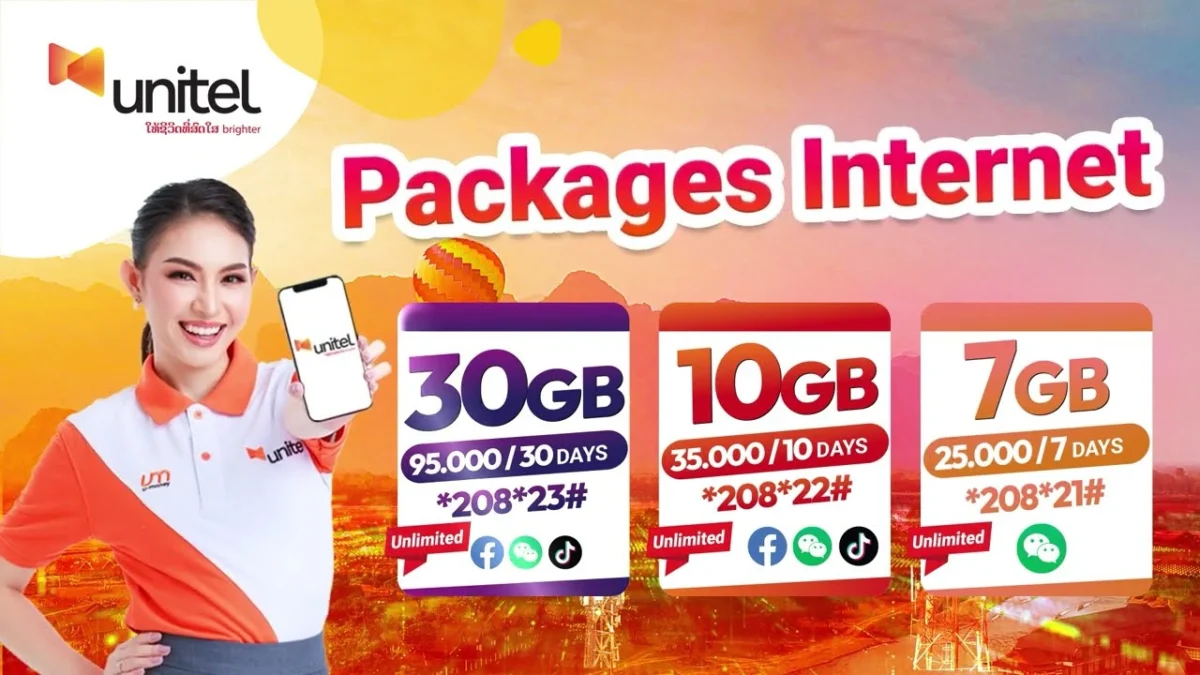
Unitel remains the undisputed market leader, commanding a 51% share of the total subscriber base. A strategic joint venture between the Lao Asia Telecom and Vietnam’s military-run telecommunications giant, Viettel, Unitel has leveraged its partner’s extensive experience in developing markets to build a robust infrastructure. Since its inception in 2008, Unitel has focused on aggressive rural expansion, a strategy that allowed it to capture over 5 million subscribers and secure its position as the primary provider for both urban and remote populations.
Lao Telecom (LaoTel) holds the second-largest position with a 34% market share. Established in 1996, LaoTel is the nation’s oldest operator and carries significant brand equity. With over 3 million subscribers, it has historically been the preferred choice for government institutions and urban professionals. While it faces stiff competition from Unitel’s rapid expansion, LaoTel has maintained its relevance through consistent upgrades to its digital service portfolio, including mobile banking and integrated enterprise solutions.
TPlus Laos, formerly known as Beeline Laos, occupies the third tier with approximately 10% of the market. As a subsidiary of the global telecommunications group VimpelCom (now VEON), the operator underwent a significant rebranding to TPlus to better align with local market sensibilities. With roughly 1 million subscribers, TPlus focuses on a younger, tech-savvy demographic, offering flexible data packages and international roaming services.
ETL Laos (Enterprise of Telecommunications Lao) rounds out the field with a 5% market share. As a state-owned entity established in its current form in 2015, ETL has faced challenges in competing with the massive capital investments of Unitel and LaoTel. However, it continues to play a vital role in providing essential voice and data services, particularly in niche government and regional sectors where state-backed infrastructure is prioritized.
A Chronology of Telecommunications Development in Laos
The evolution of the Lao telecom sector can be divided into three distinct eras: the foundational period, the competitive explosion, and the digital integration phase.
The foundational period began in 1996 with the launch of Lao Telecom. For over a decade, mobile telephony was a luxury reserved for the elite in Vientiane and major provincial capitals. The market was characterized by high costs and limited coverage, as the mountainous geography of Laos presented significant barriers to infrastructure deployment.
The competitive explosion began in 2008-2009 with the entry of Unitel and Beeline (TPlus). The arrival of Viettel’s investment through Unitel was a turning point; the company applied a "bottom-up" strategy, installing base stations in remote villages before fully saturating urban centers. This forced incumbents to lower prices and accelerate their own network rollouts. By 2015, mobile penetration had surpassed 60%, and the introduction of 3G services began to shift consumer behavior from simple voice calls to data consumption.
The current era, starting around 2020, is defined by digital integration. The COVID-19 pandemic acted as a catalyst, driving a massive increase in demand for mobile data as education, commerce, and government services moved online. During this period, the total number of subscribers crossed the 10 million mark—a figure that exceeds the country’s total population, indicating a high rate of multi-SIM usage among consumers seeking to optimize costs between different networks.
Technological Infrastructure and the Shift to 4G/5G
Laos has historically relied on the Global System for Mobile Communications (GSM) standard, but the demand for high-speed internet has necessitated a rapid technological pivot. While 2G and 3G networks still provide the backbone for voice services in rural areas, 4G LTE has become the standard in urban centers like Vientiane, Luang Prabang, Savannakhet, and Pakse.
Unitel and LaoTel have been the primary drivers of 4G adoption, investing heavily in fiber-optic backhaul to support increased data throughput. These operators have also begun pilot programs for 5G technology. The Lao government has expressed a strong desire to be among the early adopters of 5G in the ASEAN region, viewing it as a tool for industrial automation and the "Smart City" initiatives planned for Vientiane.
The introduction of eSIM technology marks another significant technological milestone. Primarily aimed at the tourism sector, eSIMs allow visitors to download local network profiles without the need for a physical SIM card. This service, facilitated by platforms such as laosesim.com and authorized retail outlets, has been highly rated by international travelers for its convenience, further integrating Laos into the global digital travel ecosystem.
Economic Analysis: Pricing and Consumer Accessibility
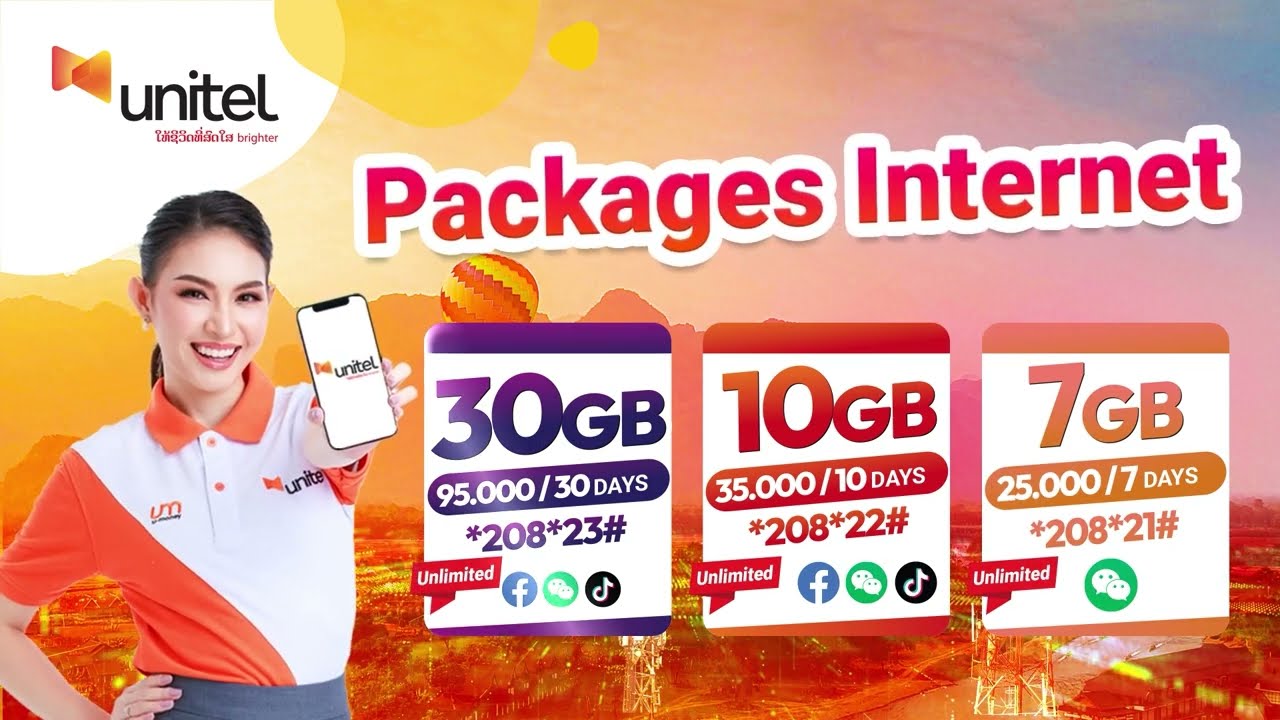
Pricing for mobile services in Laos remains some of the most competitive in Southeast Asia. This is largely due to the intense rivalry between Unitel and LaoTel. The average cost of mobile data ranges from $2 to $5 per gigabyte, depending on the validity period and the volume of the package.
Voice services have largely been commoditized, with many operators offering "on-network" calls for negligible fees to encourage subscriber loyalty. The affordability of data has been a primary driver of the "Digital Laos" vision, enabling low-income populations to access social media, news, and mobile payment platforms such as M-Money and OnePay, which are integrated into the operators’ ecosystems.
Challenges to Market Expansion
Despite the rapid growth, several structural challenges persist that hinder the full optimization of the telecom sector:
- Geographical Barriers: The rugged, mountainous terrain of northern and eastern Laos makes the installation and maintenance of cell towers exceptionally expensive. Fiber-optic cabling is similarly difficult to deploy, leading to a "digital divide" between urban centers and rural highlands.
- Regulatory Constraints: The Ministry of Technology and Communications must balance the need for market competition with the financial viability of state-linked operators. Regulatory hurdles regarding spectrum allocation and tower sharing have occasionally slowed the pace of network upgrades.
- Human Capital Shortages: There is a persistent lack of high-level technical expertise within the local workforce. While joint ventures like Unitel bring in foreign experts, the long-term sustainability of the network requires a larger pool of local engineers and cybersecurity specialists.
- Infrastructure Maintenance: Frequent power fluctuations and extreme weather during the monsoon season pose constant threats to hardware, necessitating high operational expenditures for repair and backup power systems.
Official Responses and Regulatory Environment
The Lao government, through the Ministry of Technology and Communications, has taken an active role in shaping the industry. In recent statements, officials have emphasized that telecommunications is a "spearhead" industry for the national economy. The government has implemented regulations to protect consumer rights, such as mandatory SIM card registration to combat fraud and the establishment of quality-of-service (QoS) benchmarks that operators must meet to retain their licenses.
Industry analysts suggest that the government’s approach is one of "managed competition." By maintaining a stake in major operators while allowing foreign investment from entities like Viettel, the state ensures that the telecom sector remains a source of national revenue while benefiting from international technological standards.
Broader Impact and Future Outlook
The success of mobile operators in Laos has had a multiplier effect on other sectors of the economy. The rise of fintech, e-commerce, and digital government services (e-Government) is directly dependent on the reliability of the mobile networks provided by the big four.

Looking ahead, the future of the Lao telecom market will be defined by three trends:
- 5G Commercialization: Full-scale 5G deployment is expected within the next 24 to 36 months, focusing initially on industrial zones and urban hubs.
- Rural Connectivity Initiatives: The government’s commitment to increasing internet penetration in remote areas will likely result in subsidies or public-private partnerships to extend 4G coverage to the final 10-15% of the population.
- Diversification of Services: Operators will move beyond being "bit pipes" (simple data providers) to becoming comprehensive digital service providers, offering everything from streaming content to sophisticated insurance and credit products via mobile wallets.
In conclusion, while Laos faces inherent geographical and economic hurdles, its mobile operators have demonstrated remarkable resilience and growth. The transition from 10 million subscribers to a fully realized 5G-enabled digital economy represents the next great challenge. If the current trajectory of investment and regulatory oversight continues, the telecommunications sector will remain the most vital engine of the country’s modernization efforts.
