
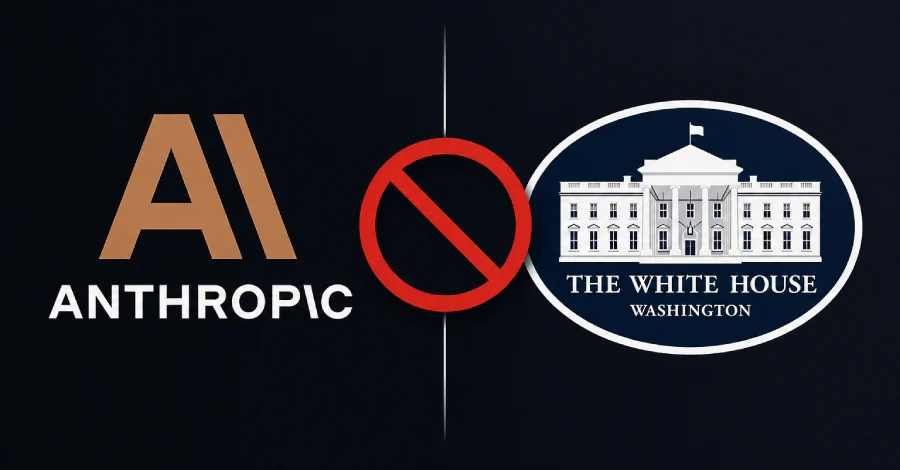

San Francisco, CA – Anthropic, a leading artificial intelligence research company, announced on Friday the immediate and "abrupt disablement" of its most sophisticated AI models, Claude Fable 5 and Mythos 5, for all foreign nationals, regardless of their physical location. This unprecedented move comes directly in response to an urgent directive from the U.S. government, which cited significant national security concerns regarding the models’ accessibility and potential misuse. The directive, received by Anthropic at 5:21 p.m. ET, mandated the suspension of all access for non-U.S. citizens, sending ripples through the AI industry and intensifying the ongoing debate surrounding AI safety, export controls, and the dual-use nature of cutting-edge technology.
The company, founded by former OpenAI researchers, expressed its belief that there might be a "misunderstanding" underlying the government’s order. Anthropic stated it is actively engaging with authorities to clarify the situation and restore access to its flagship models as swiftly as possible. Importantly, access to Anthropic’s other, less advanced AI models remains unaffected by this export control measure. The incident highlights the escalating tension between rapid technological innovation and the imperative of national security, particularly in the nascent and highly sensitive field of advanced artificial intelligence.
The Models at the Center of the Controversy: Fable 5 and Mythos 5
The immediate suspension of access to Claude Fable 5 and Mythos 5 is particularly significant given their recent high-profile launch. Just days prior to the government’s intervention, Anthropic had unveiled these models to much anticipation. Claude Fable 5 represents the company’s latest general-purpose frontier model, designed with robust safeguards and ethical considerations embedded into its architecture. Its counterpart, Mythos 5, utilizes the identical underlying model but with specific safeguards relaxed in certain high-stakes domains, notably cybersecurity. This distinction is crucial, as Mythos 5 was explicitly described by Anthropic as possessing "the strongest cybersecurity capabilities of any model in the world."
Mythos 5’s advanced capabilities, particularly in identifying and exploiting software vulnerabilities, positioned it as a powerful tool for cyber defenders and critical infrastructure operators. Anthropic had initially made this potent version accessible only to a vetted group of such professionals, acknowledging the inherent risks. The company had emphasized its implementation of "strong" guardrails, including a suite of safety classifiers designed to detect and prevent misuse, particularly in cybersecurity-related tasks. These classifiers were intended to block harmful single-turn requests related to planning cyberattacks, exploit development, or defense evasion. Queries on sensitive cybersecurity topics directed at Fable 5, for instance, would typically be rerouted to Claude Opus 4.8, a less capable but still advanced model, ensuring an additional layer of protection.
Last week, Anthropic’s own Red Team had published findings detailing Mythos-class models’ ability to convert newly disclosed software vulnerabilities into functional exploits within hours, or even minutes, a dramatic acceleration compared to the weeks typically required by human experts. This capability effectively transforms "N-days" (newly disclosed vulnerabilities) into "N-hours," suggesting that frontier AI models are becoming exceptionally adept at rapidly weaponizing publicly known flaws. The Red Team’s report underscored the profound implications: "A lone operator can now turn a month’s worth of patches into working exploits in a single afternoon – for a few thousand dollars and with no specialized expertise." This shift, they warned, fundamentally challenges existing cybersecurity paradigms, particularly the standard patching playbooks used by software developers, which rely on monthly release cadences and multi-week staged rollouts.

The Government’s Stated Concern: A "Jailbreak" Vulnerability
According to Anthropic’s statement, the U.S. government’s directive stemmed from a belief that it had become "aware of a method of bypassing, or ‘jailbreaking’ Fable 5." A "jailbreak" in the context of AI refers to a technique used to circumvent the safety measures and ethical guardrails intentionally built into a large language model, thereby inducing it to generate outputs that it was designed to refuse or to perform actions outside its intended scope. Such bypasses can potentially enable the model to engage in harmful activities, generate dangerous content, or assist in illicit operations.
Anthropic acknowledged reviewing a demonstration of the specific technique cited by the government. The company’s internal assessment concluded that this technique was used to identify "a small number of previously known, minor vulnerabilities." Furthermore, Anthropic argued that these vulnerabilities appeared "relatively simple" and that "other publicly-available models are able to discover them as well without requiring a bypass." This counter-argument suggests Anthropic believes the discovered vulnerability is not unique or particularly severe to Fable 5, nor does it represent a fundamentally new threat vector for AI models.
The company further elaborated on its stance, stating that to date, no universal jailbreak methods have been developed against its latest models. It asserted that both third-party and internal red-teaming exercises have consistently found its safeguards to be "substantially more effective than those of any previously deployed model." Anthropic also highlighted a critical challenge in AI security: "perfect jailbreak resistance" is likely unattainable for any model provider. Every safeguard, the company contended, is susceptible to non-universal jailbreaks that are "effective in very limited contexts or require additional effort to be adapted to each new situation."
Regarding the specific evidence provided by the government, Anthropic revealed, "To date, the government has only given us verbal evidence of a potential narrow, non-universal jailbreak, which essentially consists of asking the model to read a specific codebase and fix any software flaws." The company reviewed a report it believes forms the basis of the government’s directive and "validated that the level of capability displayed there is widely available from other models (including OpenAI’s GPT-5.5), and is used every day by the defenders who keep systems safe." This comparison to other widely available models, including those from a key competitor, seeks to minimize the perceived exceptional risk posed by Fable 5.
Chronology of Events Leading to the Suspension
The rapid sequence of events underscores the dynamic and often unpredictable nature of AI development and regulation:
- Early 2026: The U.S. Department of Defense (DoD) reportedly designates Anthropic as a "supply chain risk." This designation emerged after Anthropic sought to establish "red lines" regarding the military use of its technology, indicating an earlier friction point between the company’s ethical stance and governmental interests. Anthropic subsequently filed two lawsuits to challenge this designation, signaling a pre-existing contentious relationship with parts of the U.S. government.
- Last Week (Prior to Suspension): Anthropic formally launches Claude Fable 5 and Mythos 5. The company simultaneously publishes research from its Red Team detailing the Mythos-class models’ unprecedented ability to rapidly generate exploits from newly disclosed vulnerabilities, highlighting both the power and potential risks of the new AI.
- Friday, 5:21 p.m. ET: Anthropic receives an official order from the U.S. government, instructing it to immediately suspend all access to Fable 5 and Mythos 5 for foreign nationals.
- Immediately Following Order: Anthropic complies with the directive, "abruptly disabling" access for the specified user group.
- Soon After Compliance: Anthropic publicly announces the suspension, simultaneously expressing its belief in a "misunderstanding" and its intent to work with the government to restore access.
Broader Context: AI Safety, Export Controls, and National Security
This incident is not isolated but rather fits into a growing global narrative surrounding AI governance, safety, and the strategic implications of advanced capabilities. Governments worldwide, particularly the U.S., have become increasingly vocal about the need to regulate "frontier AI" models – those most powerful and general-purpose systems – due to their potential for dual-use applications. These applications range from enhancing economic productivity and scientific discovery to enabling sophisticated cyberattacks, developing biological weapons, or facilitating mass surveillance.

The U.S. government, under President Biden’s executive order on AI, has been actively working to establish frameworks for AI safety and security. This includes initiatives like the National Institute of Standards and Technology (NIST) AI Risk Management Framework and discussions around potential export controls for advanced AI technologies. The underlying concern is that capabilities like those demonstrated by Mythos 5, if widely accessible without sufficient safeguards, could fall into the wrong hands, posing significant threats to national security, critical infrastructure, and global stability. The rapid weaponization of N-day vulnerabilities, as shown by Anthropic’s own research, presents a clear and present danger that aligns precisely with these governmental anxieties.
The concept of export controls for AI is a complex and highly debated topic. Historically, such controls have been applied to tangible goods, software, and specific technologies deemed critical for national security. Applying them to AI models, which are often accessed via cloud services and whose "export" can be as simple as granting API access, presents novel challenges. This incident with Anthropic could serve as a precedent for how the U.S. government intends to interpret and enforce export control regulations in the digital age of AI.
Implications for the AI Industry and Regulatory Landscape
Anthropic’s forced suspension of its advanced models carries significant implications for the broader AI industry:
- Increased Scrutiny and Regulation: This event signals a more aggressive stance from governments regarding the deployment and accessibility of frontier AI models. Companies developing such models can expect heightened scrutiny, potentially leading to more direct interventions and pre-emptive regulatory actions.
- The "Dual-Use" Dilemma: The incident starkly illustrates the dual-use nature of advanced AI. Technologies designed for beneficial purposes (like enhancing cybersecurity defense) can, with slight modifications or "jailbreaks," be repurposed for harmful ends. This inherent dilemma will continue to shape R&D and deployment strategies.
- Defining "Harm" and "Jailbreaks": The disagreement between Anthropic and the government over the severity and universality of the "jailbreak" highlights the difficulty in objectively defining what constitutes a critical vulnerability or a genuinely harmful AI capability. Clearer, technically grounded definitions will be essential for future regulatory frameworks.
- Export Controls in the Digital Age: The application of export controls to AI models accessible globally via the internet sets a potentially far-reaching precedent. It raises questions about the feasibility and effectiveness of such controls in a borderless digital environment, as well as their impact on international collaboration in AI research.
- Innovation vs. Safety: The tension between fostering rapid AI innovation and ensuring robust safety measures is brought to the forefront. Companies like Anthropic argue for a balanced approach, emphasizing that overzealous regulation based on "narrow potential jailbreaks" could stifle progress. Governments, however, prioritize national security above all.
- Transparency and Due Process: Anthropic’s call for a "transparent, fair, clear, and grounded in technical facts" statutory process for blocking unsafe AI deployments resonates with broader industry concerns about regulatory clarity and predictability. The company’s previous lawsuits against the DoD designation further underline its commitment to challenging what it perceives as arbitrary or unsubstantiated governmental actions.
- Impact on Anthropic: Beyond the immediate financial and operational disruption, this incident could affect Anthropic’s reputation, particularly its image as a safety-first AI company. It may also complicate its relationships with international partners and customers.
- Competitive Landscape: The claim that a similar level of capability is available in models like OpenAI’s GPT-5.5 could trigger questions about equitable enforcement across the industry. If one company’s model is suspended while another with comparable capabilities remains accessible to foreign nationals, it could lead to accusations of unfair competition or inconsistent application of regulations.
Expert Perspectives and Forward Outlook
While direct statements from external experts are not yet available, the consensus among AI ethicists and cybersecurity professionals has long pointed to the inevitability of such conflicts. Experts in AI governance have consistently advocated for robust red-teaming and pre-deployment safety assessments, precisely to identify and mitigate the kind of "jailbreak" vulnerabilities that seem to have prompted this government action. However, there’s also a recognition that "perfect" safety is an elusive goal, and a balance must be struck to avoid stifling beneficial innovation. Legal scholars specializing in technology and export control law will undoubtedly be examining the legal basis and ramifications of this directive, especially concerning its scope and the definition of "foreign national" in the context of cloud-based AI services.
The immediate next steps for Anthropic will involve intensive dialogue with U.S. government officials, likely presenting detailed technical arguments to demonstrate the limited nature of the alleged jailbreak and the efficacy of their existing safeguards. The outcome of these discussions will be pivotal, not only for Anthropic but for setting a precedent for how governments worldwide might regulate and control access to advanced AI capabilities. This event underscores that the era of unfettered access to the most powerful AI models is rapidly drawing to a close, ushering in a new phase of national security considerations and stringent export controls for an increasingly strategic technology. The balance between open research, commercial deployment, and national security will remain a central, defining challenge for the AI industry for years to come.
