
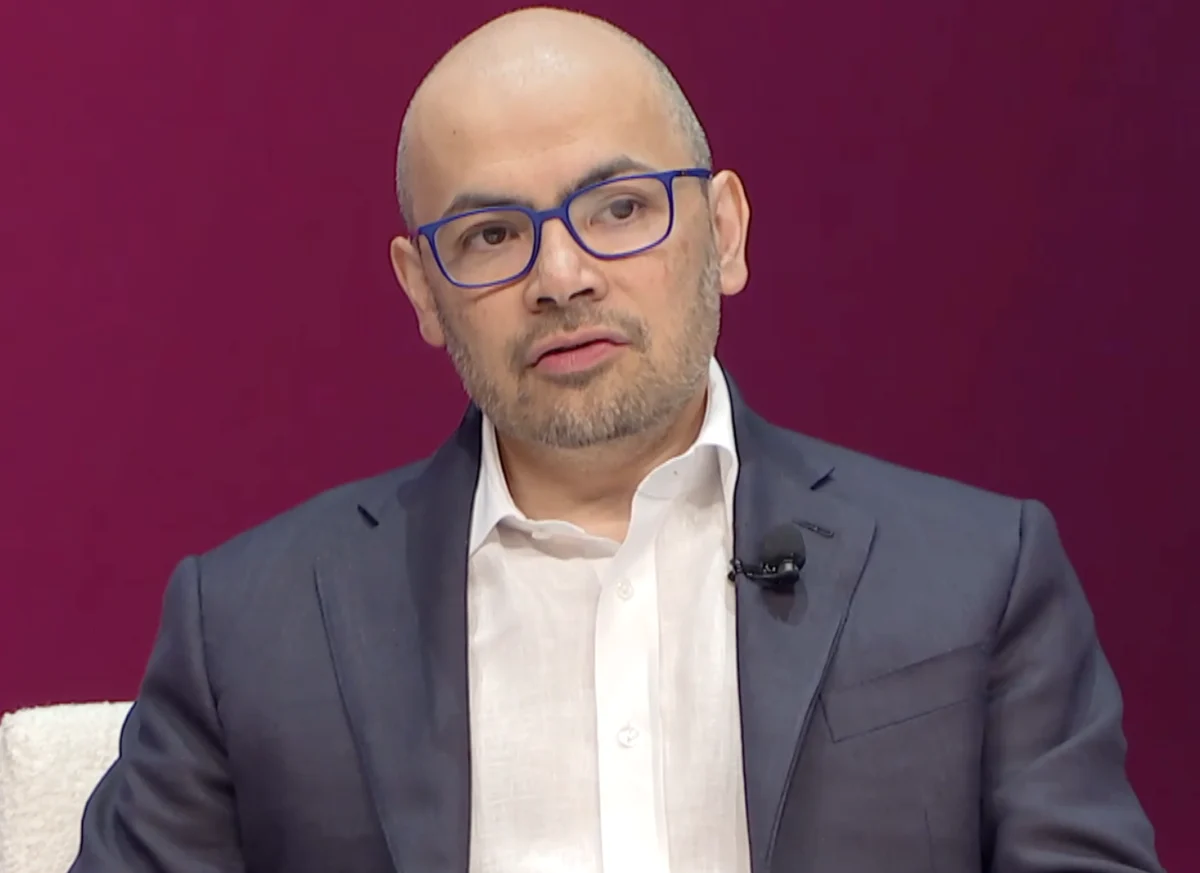

The evolution of artificial intelligence has reached a critical juncture where the distinction between computational power and cognitive mimicry is increasingly blurred. Speaking at the Cannes Lions International Festival of Creativity, Demis Hassabis, the co-founder and CEO of Google DeepMind, provided a comprehensive vision of the future of Artificial General Intelligence (AGI), positioning it not merely as a technological milestone but as a tool deeply rooted in and inspired by the complexities of the human mind. His remarks come at a time of intense global debate regarding the ethical guardrails, economic disruptions, and existential risks associated with rapid AI development. Hassabis’s perspective offers a notable departure from the more speculative or alarmist rhetoric often found in the technology sector, focusing instead on a pragmatic, scientifically driven roadmap that prioritizes human flourishing and scientific breakthrough over mere industrial automation.
The Philosophical and Technical Foundations of AGI
At the core of Hassabis’s presentation was a refined definition of Artificial General Intelligence. While the term is frequently used as a buzzword in Silicon Valley, Hassabis anchors it in the legacy of computer science pioneer Alan Turing. He defines AGI as a system capable of exhibiting the full spectrum of limited yet versatile capabilities possessed by humans. This distinction is vital; it suggests that the benchmark for AGI is not an abstract "superintelligence" but a functional parity with the human brain’s ability to navigate diverse tasks.
Hassabis noted that the human brain remains the only extant proof of general intelligence in the known universe. By referencing Turing’s seminal work on the limits of computation, Hassabis framed the quest for AGI as a scientific endeavor to understand what can be calculated and how those calculations can mirror biological processes. Despite the relentless pace of advancement—with new capabilities emerging almost weekly—Hassabis identified two significant hurdles that remain: long-term reasoning and planning, and "true creativity." He distinguishes the latter from the "remixing" of existing data seen in current generative AI models, defining true creativity as the ability to make a "leap into the novel," such as formulating a new scientific hypothesis.
A Chronology of DeepMind’s Pursuit of Intelligence
To understand the weight of Hassabis’s current predictions, it is necessary to look at the trajectory of DeepMind since its inception in 2010. Founded by Hassabis, Shane Legg, and Mustafa Suleyman, the London-based lab was built on the premise of "solving intelligence" to solve everything else.
- 2014: Google acquired DeepMind for approximately $500 million, marking one of the most significant AI acquisitions in history.
- 2016: The victory of AlphaGo over world champion Lee Sedol proved that AI could master intuitive, complex games that were previously thought to be decades away from machine mastery.
- 2020-2022: The release of AlphaFold 2 represented a paradigm shift in biology. By predicting the 3D structures of nearly all known proteins, DeepMind provided a tool that has since been used by more than two million researchers globally.
- 2023: Google merged DeepMind with the Google Brain team to form Google DeepMind, consolidating its AI research to compete with rivals like OpenAI and Microsoft.
- 2024: Hassabis continues to spearhead Isomorphic Labs, a spin-out focused on applying AI to drug discovery, aiming to reduce the time and cost of bringing life-saving medications to market.
This timeline illustrates a shift from "games" as a testing ground to "science" as the ultimate application, a theme Hassabis emphasized throughout his Cannes Lions address.
The Scientific Frontier: AlphaFold and Beyond
Hassabis argued that the primary utility of AI should be the advancement of human health and scientific discovery. The success of AlphaFold serves as the primary evidence for this claim. Traditionally, determining the structure of a single protein could take a Ph.D. student years of laboratory work; AlphaFold can predict these structures in minutes.
Through Isomorphic Labs, Hassabis intends to accelerate drug discovery by an order of magnitude. Current industry data suggests that bringing a new drug to market takes an average of 10 to 12 years and costs approximately $2.6 billion. By using AI to simulate how molecules interact with target proteins, this timeline could be slashed, potentially leading to breakthroughs in treating previously "undruggable" diseases. Hassabis envisions a "golden age of scientific discovery" where AI acts as a co-pilot for the world’s best scientists, augmenting their creative capacity to form hypotheses and interpret vast datasets.
Analyzing the Duality of Technology and Human Adaptation
While the potential for scientific advancement is vast, Hassabis did not shy away from the "duality" of general-purpose technology. The same systems designed to accelerate medicine can be repurposed by "bad actors" for harmful ends, such as the creation of novel pathogens or sophisticated cyber-attacks. This "hard problem" is currently a central focus of international policy.
Industry analysts point to the EU AI Act and the recent U.S. Executive Order on AI as evidence of a global scramble to regulate these risks. Hassabis’s approach emphasizes the need for the industry to work through these challenges collectively, ensuring that the "magical tool" of AI remains in the hands of those seeking to maximize human flourishing.
Despite these risks, Hassabis remains an optimist, citing human ingenuity and adaptability as the species’ greatest strengths. He noted that humanity has rapidly adapted to every major technological shift, from the industrial revolution to the smartphone era. He predicts that while the near-term impact of AI on various industries might be overhyped, the medium-to-long-term transformation—over the next 10 to 15 years—will be underappreciated, potentially ushering in a "new human era."
Supporting Data and Economic Projections
The scale of the transformation Hassabis describes is supported by significant economic data. According to a 2023 report by Goldman Sachs, generative AI could drive a 7% (or almost $7 trillion) increase in global GDP and lift productivity growth by 1.5 percentage points over a 10-year period. Furthermore, McKinsey & Company estimates that AI could add the equivalent of $2.6 trillion to $4.4 trillion annually across various sectors.
In the healthcare sector specifically, the AI market is projected to grow from $20.9 billion in 2024 to $148.4 billion by 2029, according to MarketsandMarkets. These figures underscore the "revolutionary" impact Hassabis anticipates in drug discovery and personalized medicine. However, his caution regarding "long-term reasoning" is also reflected in technical data; current Large Language Models (LLMs) still struggle with "hallucinations" and logical fallacies when faced with complex, multi-step mathematical or strategic problems, validating his assessment that key pieces of the AGI puzzle are still missing.
Official Responses and Industry Perspectives
Hassabis’s grounded approach has been met with a mix of respect and scrutiny within the tech community. While figures like Elon Musk have called for a pause on AI development due to existential risks, and others like Sam Altman of OpenAI have pushed for rapid deployment to reach AGI sooner, Hassabis’s "science-first" stance is often viewed as a stabilizing middle ground.
Critics within the creative industries, particularly those present at Cannes Lions, have expressed concerns regarding the displacement of human workers. In response to these concerns, Hassabis maintains that AI will "express even more humanity" by automating routine tasks and allowing humans to focus on high-level creativity. This sentiment is echoed by some industry leaders who see AI not as a replacement for the "big idea" but as a tool to execute and iterate on those ideas at unprecedented speeds.
Broader Impact and the Road Ahead
The implications of Hassabis’s vision extend beyond the laboratory and the boardroom. If AI can indeed facilitate a "golden age" of science, the geopolitical landscape could shift as nations compete for "compute" and "data sovereignty." The ability of a nation to harness AI for health, energy, and materials science will likely become a primary measure of national power in the 21st century.
Hassabis’s focus on "efficiency" also touches on a growing concern: the environmental impact of AI. Training massive models requires significant energy and water for cooling data centers. By pointing out that the human brain is "unbelievably efficient" in terms of energy and data, Hassabis sets a clear engineering goal for the next generation of AI: achieving high-level intelligence without the massive carbon footprint associated with current hardware.
As the industry moves forward, the "human-centric" model proposed by Hassabis serves as a reminder that the goal of artificial intelligence is not to replace the human mind, but to understand it more deeply and support it more effectively. Whether the next 15 years will result in a "new human era" depends largely on the industry’s ability to solve the duality problem—balancing the pursuit of a "magical tool" with the necessity of rigorous safety and ethical standards. For now, the work at the "coalface" of AI continues, driven by the hope that the leap into the novel is just a hypothesis away.
