
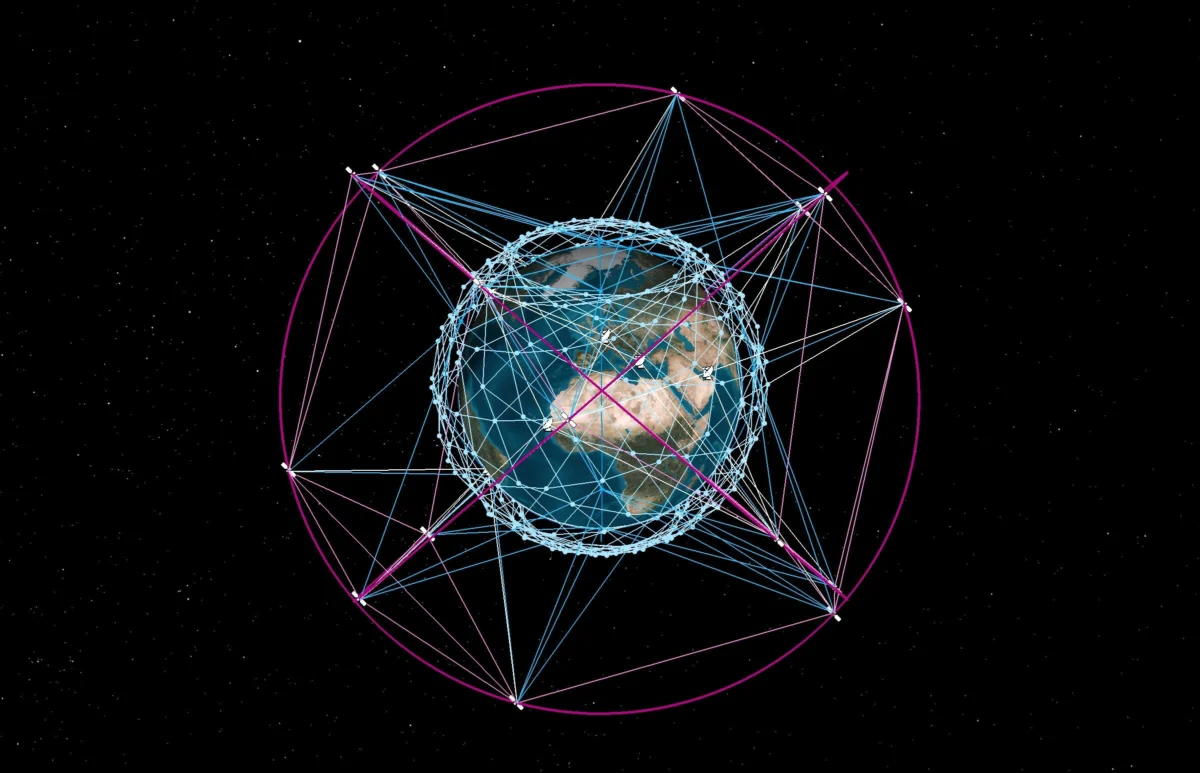

The European Commission has officially initiated a high-stakes call for proposals aimed at revolutionizing the industrial landscape of satellite user terminals for the Infrastructure for Resilience, Interconnectivity and Security by Satellite (IRIS²) constellation. This new tender, opened on Wednesday, signals a critical pivot in the European Union’s strategy to secure its digital sovereignty, shifting focus from purely research-oriented prototypes to the large-scale industrialization of ground segment hardware. Unlike traditional procurement efforts that seek a singular, finished product, this solicitation is specifically designed to bolster the underlying technologies, subsystems, and manufacturing processes required to produce affordable, high-performance user terminals at a massive scale.
According to the official call for proposals issued by the European Commission’s Directorate-General for Defence Industry and Space (DEFIS), the initiative is structured to support up to three distinct projects with a combined budget of €20 million (approximately $23 million). The primary objective is to ensure that the European industrial base is capable of manufacturing terminals that are not only technologically superior but also economically competitive with commercial entities like SpaceX’s Starlink and Amazon’s Project Kuiper. The EU is looking to foster production scenarios capable of delivering thousands of units per month, a volume that reflects the ambitious scope of the IRIS² mission.
Strategic Objectives and Technical Requirements
The IRIS² constellation is envisioned as a multi-orbit system, integrating satellites in Low-Earth Orbit (LEO) and Medium-Earth Orbit (MEO), and potentially leveraging existing Geostationary (GEO) assets. This complex architecture necessitates a new generation of user terminals capable of seamless handover between different orbital planes and frequency bands. The tender emphasizes several key areas of technological readiness, specifically focusing on the Ka-band antenna-subsystem. The Ka-band is vital for the high-throughput data rates required for modern governmental and military applications, as well as high-speed broadband for commercial and rural users.
A significant portion of the tender is dedicated to ensuring "industrial readiness," which includes the optimization of manufacturing processes and the procurement of specialized equipment. The EU is particularly interested in proposals that address the supply chain vulnerabilities that have historically plagued European space hardware production. Furthermore, the call highlights the necessity for modem and baseband industrial readiness for 5G New Radio (NR) Non-Terrestrial Network (NTN)-compliant solutions. By aligning IRIS² with 5G NR NTN standards, the European Union aims to ensure that its satellite infrastructure can integrate directly with terrestrial mobile networks, allowing for a hybrid connectivity ecosystem that provides "always-on" service regardless of geography.
The Evolution of IRIS²: A Chronological Context
The journey toward IRIS² began as a response to the growing global reliance on space-based connectivity and the realization that Europe lacked a sovereign equivalent to the rapidly expanding American LEO constellations.
- February 2022: The European Commission first proposed the Union Secure Connectivity Programme, which would later be branded as IRIS². The goal was to provide a third major pillar for the EU’s space program, joining the Galileo global navigation satellite system and the Copernicus Earth observation program.
- March 2023: Regulation (EU) 2023/588 was formally adopted, establishing the program for the period 2023-2027. This provided the legal framework and an initial budget allocation of approximately €2.4 billion from the EU budget, to be supplemented by European Space Agency (ESA) funding and private investment.
- 2023–2024: The European Commission entered into intensive negotiations with the SpaceRise consortium, a powerhouse group of European space and telecommunications companies including SES, Eutelsat, Hispasat, Airbus Defence and Space, and Thales Alenia Space. These negotiations aimed to define the public-private partnership (PPP) that would build and operate the constellation.
- September 2024: The opening of the current tender for user terminal industrialization marks a transition from the "design" phase of the constellation to the "scalability" phase, recognizing that the ground segment is often the most significant bottleneck in deploying large-scale satellite networks.
Addressing the Economic and Industrial Gap
One of the central challenges facing the IRIS² program is the cost of user equipment. In the LEO satellite market, the user terminal—often consisting of a sophisticated electronically steered antenna (ESA)—can be the most expensive component for the end-user. For IRIS² to be viable for both governmental "Govsatcom" services and commercial broadband, the unit price must be drastically reduced through advanced manufacturing techniques.
The EU’s decision to fund "industrial readiness" rather than a specific product is a calculated move to lower the barrier to entry for European Small and Medium-sized Enterprises (SMEs) and mid-cap companies. By subsidizing the development of manufacturing lines and supply chain measures, the EU hopes to create a competitive marketplace of terminal providers. This approach is intended to deliver "tangible industrial outputs" that demonstrably advance the readiness of future governmental Ka-band user terminals.
Official documents suggest that the projects must prove they can support multi-year production horizons. This long-term perspective is essential for military and governmental users who require a stable and predictable supply of hardware for long-term deployments in remote or contested environments.
Stakeholder Perspectives and Market Implications
While official statements from the SpaceRise consortium members have remained cautious during ongoing contract finalizations, industry analysts suggest that this tender is a direct response to pressure from member states to ensure that IRIS² is not just a "prestige project" but a commercially and operationally viable utility.
"The focus on 5G NR NTN compliance is a game-changer," says Dr. Elena Rossi, a senior satellite communications analyst. "It ensures that the European space industry isn’t building a proprietary ‘walled garden’ but is instead contributing to a global standard. This makes the terminals more attractive for export and ensures that European defense forces can operate in a multi-domain environment with interoperable hardware."
From a geopolitical standpoint, IRIS² is Europe’s answer to the dominance of American commercial giants. By controlling the ground segment technology, the EU ensures that it is not dependent on foreign-controlled "black box" technology for its most sensitive communications. This is particularly relevant for the "Govsatcom" component of IRIS², which will handle encrypted data for diplomatic services, maritime surveillance, and crisis management.
Technical Deep-Dive: Ka-Band and 5G Integration
The technical requirements of the tender reflect the cutting edge of satellite engineering. The Ka-band (26.5–40 GHz) offers significantly more bandwidth than the lower L- or Ku-bands but requires more precise antenna technology to maintain a link with satellites moving rapidly across the sky in LEO. The tender’s focus on "antenna-subsystem industrial readiness" likely points toward the development of more efficient Phased Array Antennas (PAA). These antennas use software to steer the beam electronically, allowing for instantaneous switching between satellites without the need for moving mechanical parts, which are prone to failure.
Furthermore, the integration of 5G NR NTN is a strategic move to leverage the massive economies of scale in the terrestrial 5G market. By using 5G protocols, satellite terminal manufacturers can utilize standardized chips and components, further driving down costs. This convergence of satellite and cellular technology is expected to be a primary driver of the "Direct-to-Device" (D2D) market, though the IRIS² terminals in this specific tender are likely intended for higher-capacity fixed and mobile ground stations rather than smartphones.
Broader Impact on European Sovereignty
The IRIS² constellation is more than a telecommunications project; it is a fundamental component of the EU’s "Strategic Compass" for security and defense. In an era where cyber warfare and the disruption of undersea cables are credible threats, a sovereign space-based network provides a "hardened" alternative for essential services.
The €20 million allocated for this tender is a fraction of the total projected cost of IRIS², which some estimates suggest could reach €6 billion to €10 billion when accounting for private investment and lifecycle costs. However, this specific investment in user terminal industrialization is seen as a "force multiplier." If the EU can successfully foster a domestic industry capable of producing thousands of secure terminals per month, it secures the "last mile" of its space infrastructure.
The project also aims to bridge the digital divide within Europe. While urban centers enjoy high-speed fiber, many rural and "dead zone" areas remain disconnected. IRIS² intends to provide high-speed broadband to these regions, supporting the EU’s "Digital Decade" goals. By making the terminals more affordable through this industrialization drive, the EU makes it more feasible for local governments and businesses in remote areas to adopt the technology.
Next Steps and Future Outlook
The deadline for proposals under this call is expected to draw significant interest from a consortium of European aerospace firms and tech innovators. Following the evaluation of the proposals, the selected projects will begin work on advancing the manufacturing maturity of the hardware.
As the IRIS² satellites begin their launch sequence—targeted for the latter half of the decade—the success of this tender will be measured by whether the ground segment is ready to meet them. The European Commission has made it clear: the goal is not just to have satellites in the sky, but to have a robust, sovereign, and industrially capable ecosystem on the ground that ensures Europe remains a leader in the global space economy.
The delivery of tangible industrial outputs from these grants will be monitored closely. If successful, the models developed here for Ka-band and 5G NTN terminals could become the blueprint for future European space procurement, emphasizing industrial scalability as much as scientific achievement. In the high-stakes race for space-based connectivity, the European Union is betting that its path to success lies in the precision and volume of its industrial base.
