
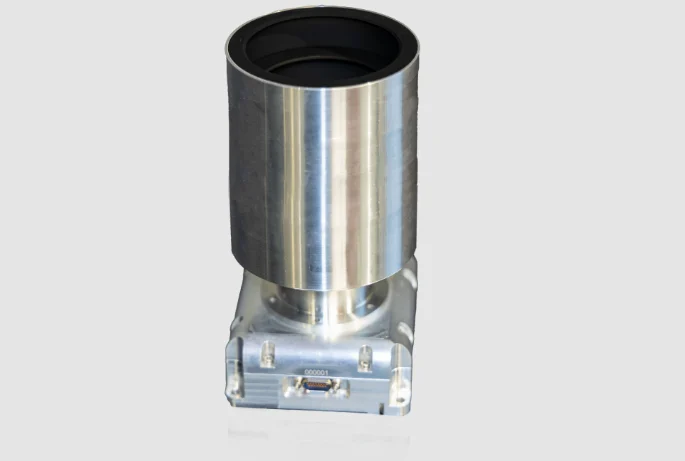

Rocket Lab USA, a leading provider of launch services and space systems components, has officially announced the launch of its next-generation star tracker, the High-Performance Star Tracker (ST-HP), marking a significant expansion of its vertically integrated space hardware catalog. This new addition to the company’s product line is specifically engineered to meet the rigorous demands of long-duration spacecraft missions, offering enhanced radiation hardening and precision pointing capabilities that are increasingly required by both commercial constellations and government-led national security programs. The introduction of the ST-HP reflects Rocket Lab’s strategic shift toward becoming an end-to-end space company, moving beyond its roots as a dedicated small-satellite launch provider to become a dominant force in the global spacecraft component market.
Technical Specifications and the Push for Resilience
The primary innovation of the ST-HP lies in its advanced radiation hardening, a critical requirement for satellites operating in harsh orbital environments for extended periods. Rocket Lab has confirmed that the ST-HP is designed to withstand a board-level Total Ionizing Dose (TID) of more than 50 kilorads (kRad). In the context of space exploration, radiation resistance is paramount; high-energy particles from the sun and cosmic rays can degrade electronic components over time, leading to system failures or "bit flips" in a spacecraft’s memory. By achieving a 50 kRad rating, the ST-HP is positioned to maintain precise spacecraft pointing and payload stability during multi-year missions, including those in Medium Earth Orbit (MEO) or Geostationary Orbit (GEO), where radiation exposure is significantly higher than in the more common Low Earth Orbit (LEO).
A star tracker is an optical device that functions as a celestial navigation system. By capturing images of the star field and comparing them against an internal database of known constellations, the device determines the spacecraft’s orientation—or attitude—with high precision. The ST-HP improves upon this fundamental technology by integrating higher-fidelity sensors and more robust processing algorithms, ensuring that the "attitude determination" remains accurate even when the spacecraft is subjected to the thermal and radiative stresses of deep space or long-term orbital life. This level of precision is vital for missions involving optical communications (laser links), high-resolution Earth observation, and complex scientific instrumentation, where even a fraction of a degree of misalignment can result in mission failure.
The Evolution of Rocket Lab’s Star Tracker Heritage
The launch of the ST-HP is the latest milestone in a decade-long history of star tracker development within the Rocket Lab ecosystem. The company’s heritage in this sector was significantly bolstered by its 2020 acquisition of Sinclair Interplanetary, a pioneer in small-satellite components. Since 2013, the legacy model, known as the ST-RT, has established itself as an industry workhorse. With more than 175 units currently in orbit and a total of over 185 units flown across various missions, the ST-RT provided the foundational flight data necessary to develop the more advanced ST-HP.
In addition to the heritage ST-RT and the new high-performance model, Rocket Lab continues to offer the ST-HV. This model was specifically designed for rapid production and scalability, catering to the burgeoning "New Space" market where speed to orbit is a primary driver. The ST-HV currently has more than 14 units on orbit, serving missions that require a balance between reliability and high-volume manufacturing. By diversifying its lineup into the ST-RT (heritage), ST-HV (rapid production), and ST-HP (high performance), Rocket Lab is effectively segmenting the market to serve everything from experimental CubeSats to high-value government assets.
Strategic Context: The Rise of Space Systems
Rocket Lab’s decision to invest heavily in component development like the ST-HP is part of a broader corporate strategy to insulate the company from the inherent volatility of the launch market. While the Electron rocket remains a frequent flier and the upcoming Neutron vehicle is highly anticipated, the company’s "Space Systems" division has become a massive revenue driver. This division encompasses not only star trackers but also reaction wheels, solar panels (through the acquisition of SolAero Technologies), flight software (via Advanced Solutions, Inc.), and separation systems (via Planetary Systems Corporation).
In recent quarterly financial reports, Rocket Lab has demonstrated that its Space Systems segment often accounts for a substantial portion of its total revenue, sometimes rivaling or exceeding launch revenue. By manufacturing the components that go onto the satellites they launch—and selling those same components to competitors and third-party satellite builders—Rocket Lab has created a "closed-loop" business model. The ST-HP is a quintessential example of this strategy: a high-margin, high-reliability component that addresses a specific gap in the market for resilient, off-the-shelf satellite hardware.
Official Perspectives and Industry Reaction
Brad Clevenger, President of Space Systems at Rocket Lab USA, emphasized the company’s commitment to evolving alongside the needs of its diverse customer base. "Rocket Lab continues to evolve our end-to-end offerings by introducing state-of-the-art solutions to meet the changing needs of commercial and government missions," Clevenger stated during the product unveiling. He highlighted that the ST-HP was built upon "decades of experience," suggesting that the transition from Sinclair Interplanetary’s original designs to Rocket Lab’s current manufacturing scale has allowed for a "more resilient product that gives customers the high accuracy and performance they need without added cost, lead time, or manufacturing risk."
Industry analysts suggest that the "without added cost or lead time" aspect of Clevenger’s statement is particularly relevant. Historically, high-performance, radiation-hardened components were custom-built, requiring years of development and exorbitant budgets. Rocket Lab’s ability to offer a 50 kRad-rated star tracker as a standard product could disrupt the traditional procurement cycles for defense and scientific missions.
While official reactions from major satellite bus manufacturers are typically kept confidential due to non-disclosure agreements, the market trend toward "commercial-off-the-shelf" (COTS) components for government programs—such as the Space Development Agency’s (SDA) Proliferated Warfighter Space Architecture—suggests a high level of interest in the ST-HP. Rocket Lab is already a prime contractor for the SDA, building satellite buses that will likely utilize these very components.
Chronology of Rocket Lab’s Component Expansion
To understand the significance of the ST-HP, one must look at the timeline of Rocket Lab’s expansion into the hardware sector:
- 2013: Initial launch of the ST-RT star tracker by Sinclair Interplanetary, beginning the heritage of the product line.
- April 2020: Rocket Lab acquires Sinclair Interplanetary, bringing star tracker and reaction wheel manufacturing in-house.
- 2021: Rocket Lab acquires Advanced Solutions, Inc. (ASI) and Planetary Systems Corporation (PSC), adding flight software and separation systems to its portfolio.
- January 2022: Acquisition of SolAero Technologies, a leading provider of space solar power solutions, making Rocket Lab one of the largest producers of space-grade solar cells in the world.
- 2023: Rocket Lab surpasses 150 star tracker units flown, signaling a ramp-up in production for large constellations.
- Current: Launch of the ST-HP, targeting the high-reliability and long-duration mission segment.
This timeline illustrates a deliberate move from being a "delivery service" (launch) to being a "builder" (space systems). The ST-HP represents the maturation of this journey, moving from basic functional components to specialized, high-performance hardware.
Broader Implications for the Space Industry
The introduction of the ST-HP has implications that extend beyond Rocket Lab’s balance sheet. It signals a shift in the satellite manufacturing landscape toward standardization and resilience. As the orbital environment becomes increasingly crowded and the threat of electronic interference or space weather events grows, the baseline requirement for radiation hardening is rising.
Furthermore, the ST-HP addresses a critical bottleneck in the supply chain. During the post-pandemic recovery, the space industry struggled with long lead times for specialized electronics. By leveraging its vertically integrated manufacturing facilities in New Zealand and the United States, Rocket Lab aims to provide a reliable supply of these critical sensors. This helps satellite operators maintain their launch schedules and reduces the overall risk profile of complex missions.
From a geopolitical perspective, the focus on radiation hardening and "payload stability" is closely tied to the modernization of military satellite constellations. Modern defense strategies rely on "proliferated" constellations—large numbers of smaller, cheaper satellites rather than a few large, expensive ones. However, these smaller satellites still require high-level performance to maintain secure communications and surveillance links. The ST-HP provides the necessary precision and durability for these missions without the "exotic" price tag of legacy aerospace components.
Future Outlook: Beyond Earth Orbit
As Rocket Lab looks toward the future, the ST-HP is likely to find applications in lunar and interplanetary exploration. The company has already demonstrated its deep-space capabilities with the CAPSTONE mission to the Moon for NASA and its upcoming mission to Mars (EscaPADE). Missions venturing beyond the protective shield of Earth’s magnetic field require the exact type of radiation resilience offered by the ST-HP.
The ST-HP also serves as a precursor to the technologies Rocket Lab will need for its Neutron rocket, which is designed to launch larger constellations and potentially human-rated missions. The data gathered from the ST-HP units in orbit will feed back into the company’s iterative design process, potentially leading to even higher kRad ratings or smaller form factors in the years to come.
In conclusion, the launch of the High-Performance Star Tracker is more than just a product update; it is a declaration of Rocket Lab’s intent to lead the high-reliability satellite component market. By combining the heritage of Sinclair Interplanetary with the manufacturing muscle and strategic vision of Rocket Lab, the ST-HP is poised to become a critical component for the next generation of spacecraft, ensuring that whether a satellite is imaging the Earth or navigating toward the stars, it does so with unprecedented resilience and precision.
