
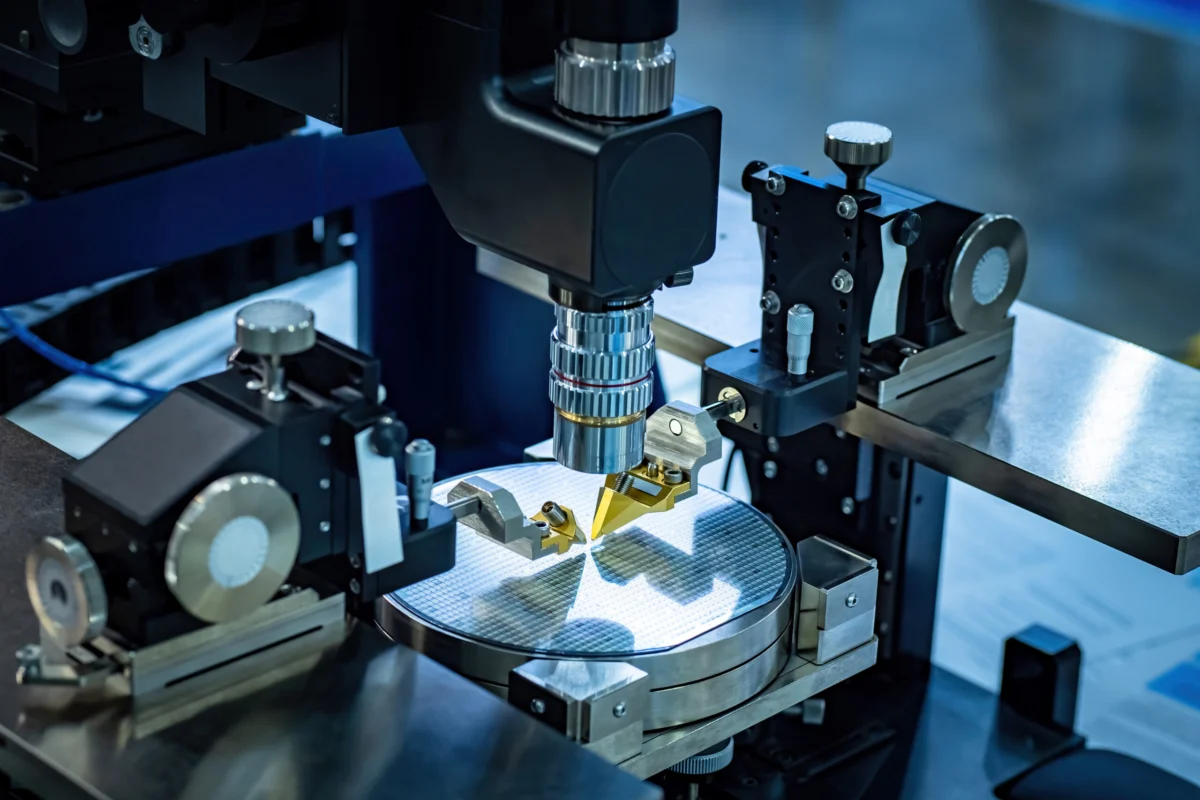

The global semiconductor industry is currently navigating a period of unprecedented transformation, characterized by an unrelenting drive toward miniaturization and enhanced computational power. As the architecture of integrated circuits (ICs) migrates toward 3-nanometer (nm) and 2-nanometer nodes, the complexity of manufacturing processes has increased exponentially. This shift has placed immense pressure on semiconductor fabrication plants, or fabs, to maintain high yield rates while managing the intricacies of advanced packaging, such as 2.5D and 3D stacking. In this high-stakes environment, traditional manual inspection and rule-based automated systems are increasingly viewed as bottlenecks. Consequently, Artificial Intelligence (AI) and Machine Learning (ML) have emerged as the primary catalysts for a new era in inspection and metrology, providing the speed and precision necessary to sustain the next generation of technological innovation.
The Shift from Manual Oversight to Intelligent Automation
For decades, the semiconductor industry relied on human operators and basic algorithmic filters to identify defects during the manufacturing process. These methods, while functional for larger nodes, struggle to scale alongside modern production volumes and the microscopic scale of current chip designs. Manual inspection is inherently prone to human error and fatigue, leading to inconsistencies that can result in either "over-kill"—where functional chips are discarded—or "under-kill," where defective chips bypass quality control, potentially leading to costly failures in end-user devices.
The integration of AI into inspection systems marks a fundamental departure from these legacy practices. Unlike traditional Automated Optical Inspection (AOI) that relies on rigid, pre-defined parameters and binary "pass/fail" logic, AI-driven platforms utilize deep learning to recognize nuances in chip topography. These systems do not merely follow a list of rules; they interpret data in a manner similar to the human brain but with the processing speed of a supercomputer. By leveraging Big Data, AI can identify patterns and anomalies that are invisible to the naked eye and undetectable by standard algorithms. This capability is particularly critical as the industry moves toward high-volume manufacturing (HVM) of complex components like High Bandwidth Memory (HBM) and heterogeneous integration architectures.
Historical Context and the Chronology of Inspection Technology
To understand the magnitude of the current AI revolution, it is essential to examine the evolution of inspection technology over the last thirty years.
In the 1990s and early 2000s, inspection was largely reactive. Fabs utilized statistical process control (SPC) to monitor yields, but the actual detection of defects often occurred at the end of the production line. As nodes shrank below 65nm, the industry adopted rule-based AOI, which used "blob analysis" and edge detection to find surface irregularities. However, as the industry crossed the 10nm threshold around 2017, these rule-based systems began to generate an unmanageable number of false positives, often referred to as "nuisance defects."
By 2020, the convergence of high-performance computing and advanced neural networks allowed companies like Nordson to introduce AI-integrated systems. These platforms, such as the SQ3000 Multi-Function System, represented a shift from reactive to proactive metrology. Today, the industry is entering the "Autonomous Phase," where systems are not only detecting defects but are also self-optimizing and predicting potential failures before they occur. This timeline illustrates a move from human-led oversight to machine-assisted detection, and finally, to machine-led intelligence.
Technical Breakthroughs: Speed, Accuracy, and the Power of Generative AI
One of the most significant metrics in semiconductor manufacturing is "time to results." In an industry where a single production line can represent billions of dollars in investment, any delay in identifying a process excursion can lead to millions of dollars in lost revenue. The application of generative AI and deep learning has produced staggering improvements in throughput.
A primary example of this is the inspection of Through-Silicon Vias (TSVs). TSVs are critical components in 3D packaging, providing the vertical electrical connections that allow chips to be stacked. Evaluating these at a micron level is a grueling task for conventional metrology tools, often requiring an hour or more to complete a comprehensive scan of a single wafer. However, recent advancements in generative AI have reduced this timeframe to under a minute—a nearly hundredfold improvement. This allows for in-line inspection, where every wafer can be screened in real-time without slowing down the production flow.
Furthermore, AI’s ability to handle "corner fill" inspection—a process that identifies the integrity of underfill material at the edges of a die—solves a long-standing challenge. Traditional blob analysis often fails in these areas due to the complex reflective properties of the materials used. AI models, trained on thousands of varied images, can distinguish between a benign reflection and a structural void with a level of accuracy that was previously unattainable.
The Role of Supervised and Unsupervised Machine Learning
The intelligence behind these systems is generally categorized into two methodologies: supervised and unsupervised learning.
Supervised learning involves training a model on a labeled dataset where defects are already identified by experts. This is highly effective for recognizing known issues, such as "bridging" between circuits or "missing bumps" on a wafer. Nordson’s Eagle AI ecosystem utilizes this approach to ensure that common, high-risk defects are flagged with near-perfect reliability.
However, the "unsupervised" approach is where the most significant future potential lies. In unsupervised learning, the AI is fed vast amounts of data without prior labeling. The system learns to define what a "perfect" chip looks like and then flags any deviation from that norm. This allows the system to detect "novel defects"—anomalies that have never been seen before or that engineers did not know to look for. As chip designs become more exotic with the rise of AI-specific accelerators, the ability to detect the unknown is becoming a competitive necessity for global foundries.
Data Security and the Challenges of Implementation
Despite the clear advantages, the adoption of AI in semiconductor manufacturing is not without its hurdles. The most prominent barrier is data sovereignty. Semiconductor designs are among the most closely guarded intellectual property in the world. Manufacturers are understandably hesitant to upload sensitive production data to a cloud-based AI for training purposes, fearing potential leaks or industrial espionage.
To address these concerns, the industry is moving toward "private cloud" solutions and "edge AI." By processing data locally on the factory floor or within a secure, isolated network, manufacturers can harness the power of ML without compromising security. Industry leaders have noted that building trust in these secure domains is as important as the algorithms themselves. The development of automated labeling—where the AI helps categorize data without human intervention—is also seen as a way to reduce the number of people who need to interact with sensitive datasets, further enhancing security.
Economic Implications and Industry Response
The economic argument for AI in metrology is rooted in the concept of "yield ramp." When a new chip design is introduced, the initial yield (the percentage of functional chips per wafer) is often low. The faster a company can identify and fix the causes of these defects, the faster they can "ramp" to high-yield production. AI-driven metrology accelerates this learning curve, potentially saving companies months of trial and error.
Market analysts suggest that the semiconductor metrology market is expected to grow at a Compound Annual Growth Rate (CAGR) of over 6% through 2030, with the AI-software segment of that market growing at an even faster clip. Major players in the industry, including equipment providers and fab operators, are increasingly dedicating a larger portion of their Research and Development (R&D) budgets to AI.
Statements from industry observers indicate a consensus: AI is no longer a luxury for the semiconductor industry; it is a requirement for survival. As labor shortages continue to affect the high-tech manufacturing sector, the ability of AI to perform the work of dozens of highly skilled technicians—with greater speed and 24/7 consistency—is a vital hedge against human capital volatility.
Broader Impact and the Future of "Lights-Out" Manufacturing
Looking forward, the implications of AI-driven inspection extend beyond simple defect detection. We are moving toward a future of "predictive maintenance," where the inspection system can analyze trends in defect data to predict when a piece of fabrication equipment is likely to fail. For instance, if the AI notices a slight, recurring shift in the alignment of a specific component across multiple wafers, it can alert maintenance crews to intervene before the machine produces a single scrap part.
This leads toward the ultimate goal of many industry visionaries: the "lights-out" fab. In this scenario, the entire manufacturing process, from silicon ingot to finished chip, is managed by an autonomous AI ecosystem. Inspection and metrology would serve as the "central nervous system" of such a facility, providing the real-time feedback loops necessary for the factory to heal its own processes.
The era of AI-driven semiconductor manufacturing is characterized by a shift from looking at what went wrong to predicting what could go wrong. By unlocking new levels of speed through generative AI, solving unsolvable inspection challenges through deep learning, and protecting intellectual property through secure ML domains, companies like Nordson are not just improving chips—they are enabling the next century of digital progress. As the momentum of this evolution continues, the synergy between human ingenuity and machine intelligence will likely define the success of the global semiconductor supply chain for decades to come.
