
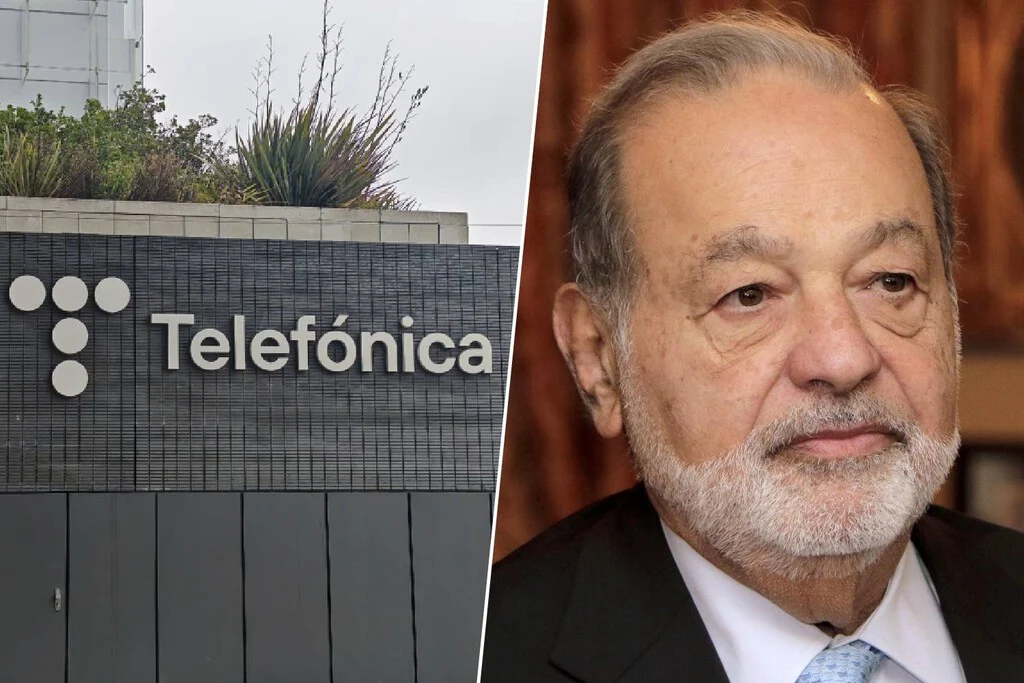

The Mexican telecommunications sector is currently navigating a period of significant upheaval, marked by contentious regulatory initiatives and shifting market dynamics. At the forefront of these discussions is the ongoing debate surrounding the mandatory registration of mobile phone lines, a policy vigorously defended by Mexican telecommunications authorities despite mounting opposition from industry giants and consumer advocates. Adding to this complex landscape are the enduring challenges posed by exorbitant spectrum costs and the recent, impactful withdrawal of Telefónica from the Mexican market. These critical issues were central to the recent annual conference of Carlos Slim, honorary president of América Móvil, whose pointed remarks have underscored the urgent need for a comprehensive reevaluation of the sector’s regulatory and operational framework.
The Contentious Path of Mandatory Mobile Line Registration
The concept of a national registry for mobile phone users, known as the Padrón Nacional de Usuarios de Telefonía Móvil (PANAUT), emerged from a perceived necessity to combat rising crime rates, particularly extortion and kidnapping, which have frequently leveraged unregistered mobile lines. The legislative push for PANAUT gained momentum, culminating in its approval and subsequent implementation efforts. The core premise is that by linking every active mobile line to a verified identity, law enforcement agencies would gain a crucial tool in tracing and deterring criminal activities.
However, the execution of PANAUT has been fraught with difficulties and widespread criticism since its inception. While the government’s regulatory bodies, including the Comisión Reguladora de Telecomunicaciones (CRT) under the Ministry of Communications and Transport (SCT), continue to champion the initiative as a vital security measure, a chorus of dissenting voices has questioned its efficacy, practicality, and potential implications. The GSMA, the global association of mobile operators, has publicly expressed its disagreement with the current management of the situation, highlighting concerns shared by a broad spectrum of stakeholders.
The most pressing concern revolves around the sheer scale of the undertaking. Mexico boasts over 140 million active mobile lines, a vast majority of which are prepaid. The mandatory registration process, which requires users to provide personal data and, in some proposals, biometric information, has been progressing at what many describe as a "snail’s pace." Carlos Slim himself has characterized the advancement of the registry as "too slow" and the process itself as "very complicated," suggesting that the authorities were overly optimistic in their timelines. His direct admonition, urging them to "reestudiadita" (give it a little re-study), encapsulates the sentiment of many who believe the current approach is unsustainable.
A critical implication of this slow rollout is the impending threat to service for millions of users. Current estimates suggest that nearly 100 million lines remain unregistered. Should the authorities enforce the suspension of these non-compliant lines, the socioeconomic fallout could be substantial. Such a move would disproportionately affect vulnerable populations, including those in rural areas or low-income segments, who might lack the necessary documentation, access to registration points, or awareness of the requirements. Beyond the immediate disruption of service, there are profound concerns regarding data privacy and security. The collection of such a massive trove of personal information raises questions about its storage, protection against breaches, and potential misuse. Critics argue that a centralized database of this magnitude could become a prime target for cybercriminals, undermining the very security it aims to enhance.
Telefónica’s Departure: A Retreat with Far-Reaching Consequences
The challenges facing the Mexican telecom market are not solely regulatory. The past year also witnessed a seismic shift with the complete withdrawal of Telefónica, operating under the Movistar brand, from direct operations in Mexico. This strategic retreat, part of a broader trend by the Spanish telecommunications giant to shed assets in various Latin American markets, has significantly altered the competitive landscape.
Telefónica’s exit followed a phased approach, initially involving a network sharing agreement with AT&T and subsequently migrating its mobile virtual network operator (MVNO) services to Altan Redes. Ultimately, the company decided to cease direct infrastructure ownership and operations. Carlos Slim, in his recent address, attributed a significant portion of Telefónica’s departure to the prohibitively high cost of radioelectric spectrum in Mexico. This sentiment is echoed by other industry players, with AT&T also having voiced strong complaints regarding the steep prices associated with spectrum auctions, citing them as a major impediment to its 5G expansion and overall investment in network improvements.
The high cost of spectrum has long been a contentious issue. Spectrum, the invisible airwaves through which mobile communications travel, is a finite and crucial resource for telecommunications operators. Governments worldwide auction off licenses for its use, generating revenue. However, when these costs become excessively high, they can stifle competition, discourage investment, and ultimately impact consumers through higher service prices or slower technological advancements. In Mexico, the government’s pursuit of maximizing revenue from spectrum auctions has, according to industry leaders, inadvertently created an environment that is less attractive for investment and sustainable growth for non-dominant players.
Beyond spectrum costs, Slim also leveled direct criticism at Telefónica’s operational decisions, particularly its move to discontinue support for 2G users. Telefónica had aimed to complete its migration to 3G and LTE networks by January 2021, effectively phasing out its 2G service. However, Slim argued that this decision was "a big mistake," pointing out that a substantial segment of the Mexican population, primarily due to economic constraints, continues to rely on feature phones compatible only with 2G networks. By shutting down 2G, Telefónica effectively left these customers without service, exacerbating the digital divide and marginalizing an already vulnerable demographic. This move contrasts sharply with América Móvil’s strategy, which has continued to maintain 2G services to cater to this market segment, underscoring a fundamental difference in their approaches to market inclusion.
Market Concentration and the Diminishing Options for Consumers
The departure of Telefónica has undeniable implications for market competition. Historically, the Mexican telecom market has been characterized by the overwhelming dominance of América Móvil’s Telcel. While regulatory efforts have been made over the years to foster greater competition, Telefónica’s exit, along with AT&T’s restrained investment due to spectrum costs, risks reversing some of these gains. Fewer major players inherently mean fewer choices for consumers, potentially leading to less competitive pricing, slower innovation, and reduced pressure on the dominant operator to improve services.
Telcel currently holds a significant majority of the market share, a position that has long been a subject of regulatory scrutiny. While the company maintains it operates within competitive parameters, the shrinking number of viable alternatives means that consumers may have limited recourse if dissatisfied with service or pricing. The success of some MVNOs (Mobile Virtual Network Operators), such as Bait, which had seen rapid growth, has also reportedly been impacted by the compulsory registration, illustrating how regulatory measures can have ripple effects across the entire ecosystem.
Carlos Slim’s Influence and the Call for Reassessment
Carlos Slim’s voice carries immense weight in Mexico and the global telecommunications industry. As the founder of América Móvil, one of the largest telecom companies in the world, his insights are not merely those of an observer but of a principal architect of the sector’s development. His decision to publicly critique key aspects of Mexico’s telecom policy signals a crucial juncture for the industry.
His call for a "reestudiadita" of the mandatory line registration is a direct challenge to the government’s current approach. Slim highlighted the immense logistical challenge of collecting and validating data for over 140 million lines, emphasizing that the process is "something very complicated" and that the deadlines set were "not reasonable." His critique is not necessarily against the principle of registration but rather against the feasibility and methodology of its implementation, particularly the tight deadlines and the potential for massive service disconnections.
Slim’s remarks also serve as a broader commentary on the overall regulatory environment in Mexico. His consistent emphasis on the high cost of spectrum, echoed by AT&T, suggests a collective industry frustration that these costs are hindering necessary investments in next-generation technologies like 5G and limiting the expansion of crucial infrastructure. The balance between generating government revenue and fostering a healthy, competitive, and innovative telecom sector is a delicate one, and Slim’s statements suggest that Mexico may have tilted too far towards the former.
Broader Implications and a Look Ahead
The confluence of these factors – the slow and controversial mobile line registration, the departure of a major competitor like Telefónica, and the persistent issue of high spectrum costs – paints a challenging picture for the future of telecommunications in Mexico.
For consumers, the immediate implications could be a reduction in competitive choices, potentially leading to less innovation and possibly higher prices in the long run. The risk of service suspension for millions of unregistered lines also presents a daunting prospect, with severe socioeconomic consequences for those who rely on mobile connectivity for essential communication, education, and economic activity.
From a regulatory standpoint, the Mexican authorities face a complex balancing act. They must reconcile the imperative of national security with the fundamental rights to privacy and access to communication. The current approach to PANAUT, as criticized by industry leaders and privacy advocates, appears to be generating more problems than solutions, calling for a pragmatic and flexible re-evaluation. This might involve extending deadlines, simplifying the registration process, improving public awareness campaigns, and critically, addressing the concerns about data security and privacy.
Economically, the current environment could deter future investment in the sector. High spectrum costs, coupled with an uncertain regulatory landscape, make Mexico a less attractive market for global telecommunications players seeking to expand or upgrade their infrastructure. This, in turn, could slow down the country’s digital transformation, hindering its competitiveness in the global digital economy. The ongoing debate around 5G deployment, already hampered by spectrum pricing, underscores this concern.
Ultimately, the challenges highlighted by Carlos Slim and other industry stakeholders call for a renewed dialogue between the government, regulators, and telecommunications companies. A collaborative approach, focused on practical solutions that balance security objectives with economic realities and consumer welfare, will be essential to navigate these turbulent waters and ensure that Mexico’s telecommunications sector can continue to grow, innovate, and serve the needs of all its citizens. The outcome of these debates will not only shape the future of connectivity in Mexico but also send a clear signal about the country’s commitment to a competitive, inclusive, and technologically advanced digital future.
