
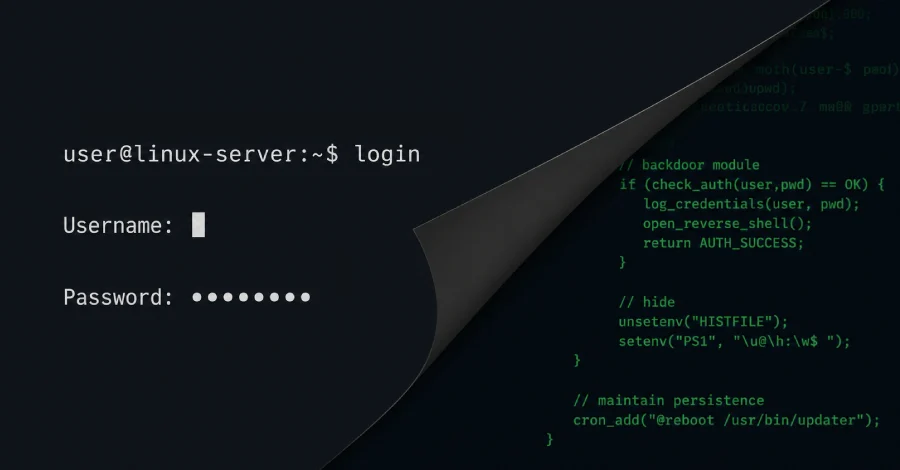

A sophisticated China-nexus threat group, identified by cybersecurity firm Sygnia as "Velvet Ant," has been revealed to have maintained a deeply entrenched presence within Linux login systems for nearly a decade, starting as early as 2016. This highly patient and stealthy operation, dubbed "Operation Highland" by Sygnia, bypassed conventional security measures by compromising the very components responsible for user authentication: the Pluggable Authentication Modules (PAM) and OpenSSH. Unlike typical malware that resides on user-level applications or system services, Velvet Ant’s strategy involved backdooring these core login mechanisms, making detection and remediation exceptionally challenging and allowing their access to persist through ordinary cleanup procedures.
The Unseen Threat: Compromising the Core of Linux Authentication
Sygnia’s investigation uncovered that Velvet Ant meticulously modified critical PAM and OpenSSH components, effectively planting its access points at a foundational level of the Linux operating system. PAM, a modular framework for authentication services, and OpenSSH, the ubiquitous secure shell protocol, are indispensable for remote access and user login across virtually all Linux-based servers and workstations. By altering these trusted programs, the attackers ensured that their presence was not merely a vulnerability to be exploited but an integrated, malicious feature of the system itself.
The earliest indicators of this compromise date back to 2016, highlighting the group’s long-term strategic planning and operational patience. Instead of deploying easily detectable new malware payloads, which modern endpoint detection and response (EDR) systems are designed to flag, Velvet Ant opted for a far more insidious approach: directly manipulating existing, legitimate system binaries. This tactic made their activities indistinguishable from normal administrative functions, as no overt exploits were required post-initial compromise, and no unusual processes or files would immediately raise alarms. This deep-seated modification allowed the group to operate under the radar for an extended period, potentially exfiltrating sensitive data and maintaining persistent access to critical infrastructure.
Technical Deep Dive: PAM and OpenSSH Backdoors
The sophistication of Velvet Ant’s operation is evident in the technical details of their PAM and OpenSSH modifications. Researchers at Sygnia identified at least nine distinct versions of backdoored PAM login modules. These variations served different purposes: some incorporated secret passwords that allowed the attackers direct, clandestine access, bypassing legitimate credentials entirely. Others were designed as sophisticated credential-harvesting tools, quietly recording real usernames and passwords as legitimate users logged into the compromised systems. This passive collection of authentication data provided the threat actors with a continuous stream of valid credentials, further cementing their access and enabling lateral movement across networks.

Similarly, OpenSSH programs were altered to include stealthy backdoors. These modified OpenSSH binaries were capable of logging not only user credentials but also every command typed by legitimate administrators and users. This comprehensive logging provided the attackers with invaluable insights into network architecture, administrative practices, and sensitive data locations. To maintain their stealth, these backdoored OpenSSH components included a hidden switch, allowing the attackers to selectively disable the logging feature when necessary, preventing an excessive log footprint that might otherwise trigger security alerts. Such a feature demonstrates a deep understanding of operational security and an intent to remain undetected for as long as possible.
Navigating Isolated Networks: The Bridgehead Strategy
A particularly challenging aspect of this campaign, and a testament to Velvet Ant’s advanced capabilities, was their ability to penetrate and persist within air-gapped or otherwise isolated networks that lacked direct internet connectivity. To achieve this, the group employed a sophisticated multi-stage approach. They first established footholds on internet-facing systems, often less critical or perimeter devices, which then served as bridgeheads. From these initial compromise points, they utilized disguised tools and an internet-facing web server as a command-and-control (C2) relay. This allowed them to tunnel commands and data through these intermediate systems, effectively creating a clandestine pathway to open remote sessions deep inside the segmented networks that were designed to be isolated from external threats.
This method highlights a significant vulnerability: even the most secure, isolated networks are only as strong as their weakest link, often a perimeter device that interfaces with the external world. Once an attacker gains control over such a bridgehead, they can leverage it to stage further attacks, bypassing the very isolation measures intended to protect the internal network. The ability to exfiltrate data from and issue commands to deeply segmented environments underscores the strategic value of such an operation, likely targeting intellectual property, critical operational data, or intelligence.
The Persistence of Velvet Ant: A Pattern of Evasion
"Operation Highland" is not an isolated incident but rather the latest manifestation of Velvet Ant’s consistent strategy of targeting trusted, foundational infrastructure components. Sygnia has been tracking this group and its evolving tactics for some time, revealing a clear pattern: each time defenders uncover and mitigate one of their footholds, Velvet Ant adapts, moving to less-monitored gear and establishing new, deeper layers of persistence.
In a 2024 case, Sygnia reported the same actor exploiting internet-exposed F5 BIG-IP appliances. These load balancers, critical for network traffic management, were converted into internal command servers, providing the group with a strategic platform for command and control within victim networks. This demonstrated their capability to weaponize legitimate network infrastructure against its owners, leveraging its inherent trust and connectivity.

Later in 2024, Velvet Ant’s adaptability was again showcased when they exploited a critical Cisco NX-OS flaw, CVE-2024-20399. This vulnerability, affecting Cisco Nexus switches, allowed the group to plant backdoors directly onto network switching hardware. While CVE-2024-20399 required prior administrative access, it served as a powerful persistence tool, allowing the attackers to maintain control over critical network infrastructure even if other access points were removed. Cisco promptly patched this vulnerability in July 2024, and the Cybersecurity and Infrastructure Security Agency (CISA) flagged it as actively exploited the very next day, underscoring the severity and real-world impact of Velvet Ant’s activities.
"Operation Highland" represents a further escalation in this strategy, moving one level deeper than network appliances and switches. By targeting the login software itself, Velvet Ant has demonstrated an unparalleled commitment to deep-seated, long-term infiltration. Load balancers, switches, and authentication systems are all components that are implicitly trusted by network administrators and are often overlooked in routine security monitoring, making them ideal hiding places for a patient and sophisticated attacker.
The Broader Implications: Redefining Trust in Cybersecurity
The discovery of Velvet Ant’s decade-long Linux login system compromise carries profound implications for the cybersecurity landscape, forcing a re-evaluation of fundamental security assumptions. Traditional security paradigms often focus on identifying and removing malicious executables, patching known vulnerabilities, and monitoring network traffic for anomalies. However, Velvet Ant’s approach renders many of these measures ineffective.
When the login system itself is compromised, standard containment strategies, such as password resets or terminating suspicious sessions, provide little to no protection. The very mechanism designed to enforce authentication and access control is working against the defender, actively aiding the attacker by providing illicit access or logging credentials. This creates a challenging remediation scenario, as merely cleaning up user accounts or reinstalling applications will not dislodge the deeply embedded backdoors.
Challenges in Remediation: "Operation Highland" is not a simple "one-CVE problem" that can be solved with a quick patch. The attacker modified trusted programs post-initial compromise, meaning the fix requires comprehensive integrity verification rather than just applying a software update. Cleanup is an incredibly delicate process: a wrong replacement of a core system binary can inadvertently lock legitimate administrators out of a live production system, potentially causing widespread operational disruption. This necessitates a meticulous and forensic approach, often involving system re-imaging or extensive integrity checks of every core system binary and library.

Rethinking Monitoring and Integrity: The wider lesson from Velvet Ant’s campaign is unequivocally clear: infrastructure that typically operates outside the scope of normal security monitoring still requires stringent integrity checks. This now explicitly includes the foundational login layer of operating systems. Organizations must move beyond perimeter defenses and endpoint protection to implement robust integrity monitoring for critical system files, including PAM modules and OpenSSH binaries. Tools that perform cryptographic hashing of system files and compare them against known good baselines are becoming essential.
Zero-Trust and Supply Chain Security: This incident further validates the principles of a zero-trust architecture, where no user, device, or application is inherently trusted, regardless of its location within the network. Every access attempt and every system interaction must be authenticated and authorized. Furthermore, it highlights the critical importance of supply chain security. While Velvet Ant’s initial entry vector isn’t detailed as a supply chain attack in the provided context, the manipulation of core system components emphasizes the need to ensure the integrity of software from its source to its deployment.
Expert Reactions and Future Outlook
While specific official statements regarding "Operation Highland" beyond Sygnia’s disclosure are pending, the cybersecurity community is likely to react with heightened concern. This type of long-term, deep-level compromise by a state-sponsored actor represents a significant threat to national security, critical infrastructure, and corporate intellectual property. Cybersecurity agencies like CISA will likely issue advisories urging organizations to review their Linux system integrity and implement advanced detection mechanisms for such sophisticated threats.
Security experts will undoubtedly emphasize the need for:
- Advanced Integrity Monitoring: Continuous, real-time monitoring of critical system files for unauthorized modifications.
- Behavioral Analytics: Detecting unusual login patterns, command execution, or network traffic that might indicate a compromise of core services.
- Hardened Configuration: Implementing strict security configurations for PAM, OpenSSH, and other critical authentication components.
- Proactive Threat Hunting: Actively searching for indicators of compromise (IOCs) related to Velvet Ant’s known tactics, techniques, and procedures (TTPs).
- Incident Response Planning: Developing detailed playbooks for responding to deep-seated compromises of core system components.
The Velvet Ant group’s ability to remain hidden for nearly a decade within the very fabric of Linux authentication systems serves as a stark reminder of the evolving and increasingly sophisticated nature of state-sponsored cyber espionage. It underscores that trust, especially in core system components, must be continuously earned and verified, challenging organizations to rethink their security strategies to protect against adversaries capable of such prolonged and deep infiltration. The "Operation Highland" revelation reinforces the urgent need for a comprehensive, multi-layered security approach that extends to the deepest layers of operating system and network infrastructure, acknowledging that today’s sophisticated threats will always seek the path of least resistance – or in this case, the path of maximum stealth and persistence within trusted systems.
