
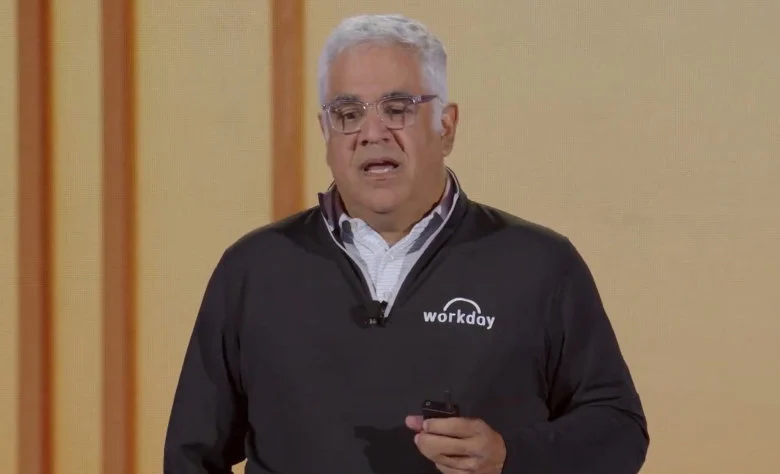

The enterprise software landscape is currently undergoing a seismic shift, driven by the rapid maturation of generative artificial intelligence and a fundamental change in how corporations manage human capital and financial data. At the center of this transition is Workday, a company that has recently signaled a total "re-invention" of its identity under the leadership of its returning CEO and co-founder, Aneel Bhusri. Having returned to the helm to guide the firm through what he describes as the most significant technological transformation in modern history, Bhusri has initiated a strategic overhaul dubbed "Chapter 4." This strategy is designed to strip away the bureaucratic layers of a mature corporation and return the organization to the agility and "growth mindset" of a start-up, specifically tailored to lead the nascent field of agentic AI.
The Strategic Pivot and the Return of the Founder
Aneel Bhusri’s return to the CEO role three months ago marked a turning point for Workday. While the company has long been a dominant force in Human Capital Management (HCM) and Financial Management, the emergence of AI necessitated a change in operational velocity. During Workday’s recent Annual Innovation Summit, industry analysts noted a distinct shift in the firm’s trajectory, characterizing the current phase as a "re-founding." Bhusri has openly embraced this characterization, citing a need for the company to operate differently than it has in recent years.
To inform this transition, Bhusri has drawn inspiration from historical precedents of successful leadership returns, most notably that of Steve Jobs to Apple. Bhusri pointed to Jobs’ management philosophy—specifically the concept of being "the biggest start-up in the world"—as the blueprint for Workday’s current evolution. This "start-up playbook" involves flattening organizational hierarchies, accelerating the decision-making process, and ensuring that the best ideas win regardless of seniority. By reducing internal friction, Workday aims to outpace both legacy competitors and emerging AI-native startups.
Chapter 4: The Architecture of Agentic AI
Workday’s Chapter 4 strategy is built on the premise that AI is not merely an incremental feature but a foundational shift in how enterprise software functions. Bhusri frames this as a "re-founding" moment, leveraging Workday’s existing platform—which serves more than 11,500 customers—to deploy a new generation of AI agents. The strategy focuses on three core priorities: building an AI-centric future, scaling alongside customer needs, and maintaining the firm’s core values.
A critical component of this roadmap is the development of an "AI agent factory." This internal initiative is dedicated to building specialized agents across all application areas, supported by a rapid acceleration of AI-focused Application Programming Interfaces (APIs). To lead this charge, Workday recently appointed Joel Hellermark, the founder of the newly acquired AI firm Sana, as its Chief AI Officer. The inclusion of startup founders in high-level leadership positions is a deliberate move to inject "start-up DNA" into the corporate structure, ensuring that the company remains focused on speed and innovation.
Technical Moat: The World Model of Work
As the enterprise software market becomes increasingly crowded with AI offerings, Workday is positioning its "World Model of Work" as its primary competitive advantage. Gerrit Kazmaier, Workday’s President of Product and Technology, argues that while Large Language Models (LLMs) are proficient at predicting the next token in a sentence, they lack an inherent understanding of the "physics" of business operations.
Workday’s platform currently manages over 80 million users and processes approximately 1.4 trillion transactions annually. This massive data set allows the company to map the intricate patterns of work at scale, including approval chains, monetary flows, hiring processes, and regulatory compliance. By training AI on this specific "world model," Workday claims it can achieve a level of enterprise-grade accuracy that general-purpose AI models cannot replicate. This context engine serves as the foundation for Workday’s agentic applications, ensuring that AI-driven automation remains grounded in the actual policies and processes of a given business.
The Concept of Lawful vs. Lawless Agents
In addressing the risks associated with AI deployment, Bhusri has introduced a conceptual framework for "lawful" versus "lawless" agents. In the enterprise context, "lawful" agents operate within the established guardrails of security, data privacy, and business process frameworks. Conversely, "lawless" agents are those that bypass these controls to deliver results, potentially compromising data integrity or regulatory compliance.
Workday’s strategy is built entirely on the lawful model, offering customers three distinct paths for AI integration:
- Proprietary Agents: Customers can purchase Workday’s pre-built, organically developed agents that offer a clear Total Cost of Ownership (TCO).
- Custom Development: Using "Extend Pro," customers can leverage Workday’s platform to build their own AI applications while remaining within the firm’s security architecture.
- Consumption-Based APIs: Third-party developers can build agentic applications using Workday’s AI APIs on a consumption basis, provided they adhere to the platform’s governance and security "rails."
Bhusri notes that in the highly regulated worlds of Finance and HR, there is zero market appetite for "lawless" AI, making Workday’s governed approach a critical selling point.
Operational Milestones and Customer Adoption
The transition toward agentic AI is already yielding tangible results. According to company data, Workday now has 20 organic agents in either General Availability (GA) or Early Access (EA). The adoption rate for these agents has more than doubled quarter-over-quarter, with over 4,000 customers currently utilizing at least one organically developed AI agent.
Notable early adopters include the University of Arkansas System, GE Vernova, and Mohegan. These organizations are deploying agents to resolve administrative issues and answer employee queries instantly, allowing human administrators to focus on higher-level strategic projects. Furthermore, Workday’s "Self-Service Agent" is expected to go live with its first Fortune 500 customers shortly. By the end of the current month, all HCM and Finance customers on Workday’s AI terms of service will receive Sana for Workday and the Self-Service Agent as part of their existing contracts, a move designed to accelerate mass-market penetration of AI tools.
Financial Performance and Market Context
The financial results for the first quarter of fiscal year 2026 reflect a company in a strong, albeit transitional, position. Workday reported total revenue of $2.54 billion, with a net income of $222 million—a significant increase from the $66 million reported in the same quarter a year ago. Subscription revenue, a key metric for SaaS stability, rose 14.3% to $2.35 billion. Notably, 40% of the growth in net new business was driven by these subscription gains.
Despite these positive figures, Bhusri remains pragmatic, noting that "one quarter does not make a year." The tech sector has been abuzz with talk of a "SaaSpocalypse"—a narrative suggesting that the traditional Software-as-a-Service model is under threat from AI-driven internal development or smaller, more nimble startups. However, Bhusri contends that this narrative does not align with his recent interactions with dozens of enterprise customers. He asserts that large organizations are not looking to replace their core systems with home-grown tools; rather, they are looking to incumbent providers like Workday to deliver the next generation of AI-integrated solutions.
Broader Implications for the Enterprise Sector
Workday’s pivot highlights a broader trend in the technology industry: the necessity for established giants to cannibalize their own legacy processes to survive the AI era. Bhusri’s assertion that "the 150th feature in HR or finance is not going to move the needle" underscores a shift in value proposition. In the previous era of cloud computing, success was measured by the breadth of features; in the agentic era, success will be measured by the autonomy and efficiency of the AI.
The success of Workday’s re-invention will likely serve as a bellwether for other enterprise software firms. If Workday can successfully bridge the gap between its massive historical data set and modern agentic AI, it will validate the "incumbent advantage" theory—the idea that the companies with the most data will ultimately win the AI race. However, this requires a total commitment to operational agility, as demonstrated by Bhusri’s focus on the start-up mindset.
As Workday moves into the remainder of fiscal 2026, the industry will be watching closely to see if the "Chapter 4" strategy can maintain its momentum. The company’s ability to transition from a record-keeping system to an "action-taking" system via AI agents will determine its relevance for the next decade of enterprise computing. For now, with rising net income and a clear technical roadmap, Workday appears to be successfully navigating the complexities of its founder-led re-invention.
