
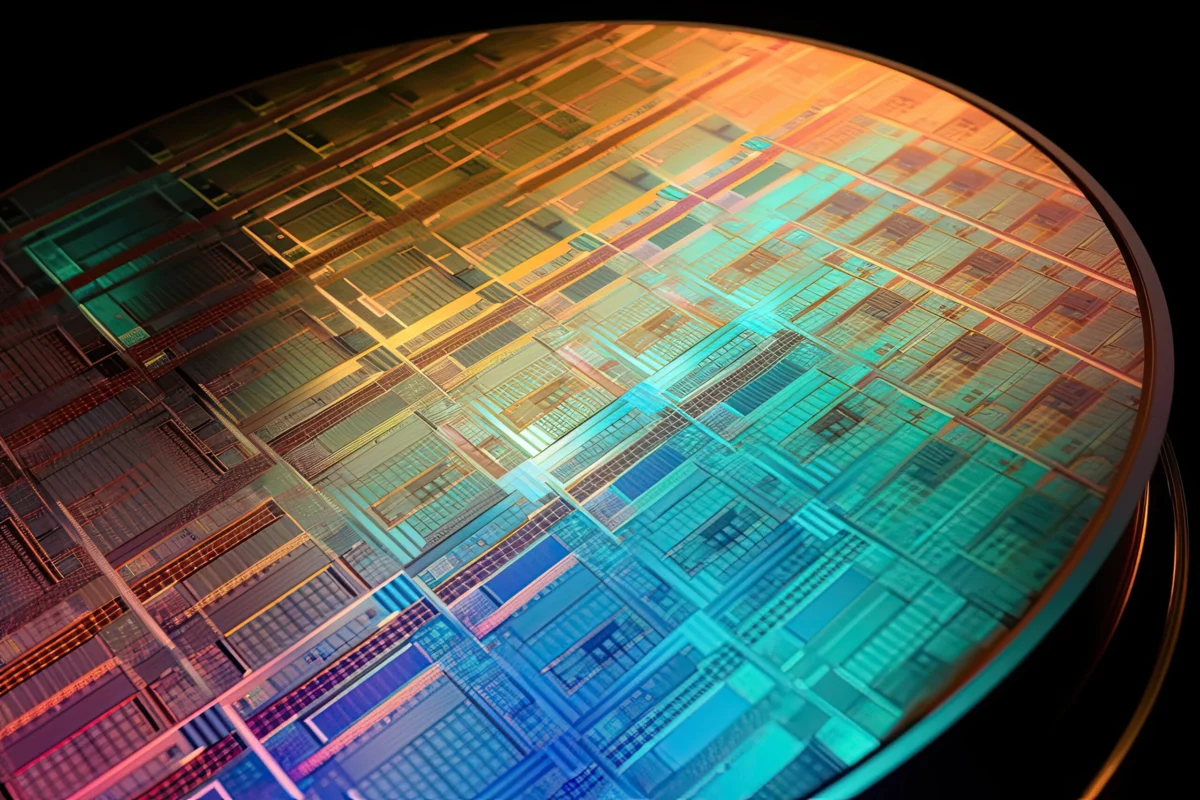

The rapid evolution of artificial intelligence and the increasing complexity of large-scale neural networks have pushed traditional computing architectures to their physical and thermal limits. In a significant step toward overcoming the "memory wall" that hinders modern AI performance, researchers from imec and KU Leuven have unveiled a comprehensive study focusing on the design-technology co-optimization (DTCO) of NOR-type Indium Gallium Zinc Oxide (IGZO) Ferroelectric Field-Effect Transistors (FeFETs). This research, detailed in a technical paper released in April 2026, explores the viability of these advanced transistors for 3D heterogeneous AI memories, specifically targeting read-centric applications that define the current era of AI inference and data processing.
The collaborative work addresses the critical need for memory solutions that can be integrated directly into the Back-End-Of-Line (BEOL) of semiconductor manufacturing. By utilizing IGZO, a wide-bandgap semiconductor, and combining it with ferroelectric materials, the research team has proposed a path toward high-density, low-power, and non-volatile memory that can be stacked in three dimensions. This architectural shift is intended to reduce the physical distance between logic and memory, thereby minimizing the energy consumption and latency associated with data transfer in traditional Von Neumann architectures.
The Technological Foundation of IGZO FeFETs
At the heart of this research is the Indium Gallium Zinc Oxide (IGZO) transistor, a technology that has already seen success in the display industry but is now being repurposed for high-performance computing. IGZO transistors are notable for their extremely low off-state leakage current, which allows for superior charge retention. When integrated with a ferroelectric gate insulator—creating a FeFET—the device becomes non-volatile, meaning it can retain information without a continuous power supply.
The researchers specifically focused on NOR-type configurations. Unlike NAND configurations, which are optimized for high-density storage and sequential access, NOR-type architectures allow for fast random access. In the context of AI, where neural network weights must be accessed quickly and frequently during inference tasks, the read speed and random access capabilities of NOR-type memory are paramount.
The paper adopts a "read-centric" perspective because AI inference workloads are overwhelmingly dominated by read operations. By optimizing the DTCO for read performance, the researchers aim to maximize the throughput of AI accelerators while maintaining the energy efficiency required for edge computing and large-scale data center deployments.
Chronology of Development: From Lab to 3D Integration
The journey toward 3D heterogeneous AI memories using IGZO FeFETs has been a multi-year effort involving iterative breakthroughs in material science and circuit design.
- 2020–2022: Material Exploration: Early research focused on the stability of IGZO and the compatibility of various ferroelectric materials, such as hafnium oxide (HfO2), with the BEOL process. Initial tests proved that IGZO could be deposited at temperatures low enough (below 400°C) to avoid damaging the underlying copper interconnects of a logic chip.
- 2023–2024: FeFET Maturity: Researchers at imec demonstrated the first stable FeFET devices using CMOS-compatible materials. During this phase, the focus shifted to improving endurance—the number of times a cell can be written to before failing—and reducing the variability of the ferroelectric switching voltage.
- 2025: 3D Stacking Prototypes: The transition to three-dimensional structures began with the development of vertical channel architectures. This allowed for multiple layers of memory to be built on top of a single logic wafer, significantly increasing the memory density per square millimeter.
- April 2026: The DTCO Breakthrough: The current paper by Xiang, Chen, Ronchi, et al., represents the culmination of these efforts. It provides the first holistic DTCO framework that evaluates how these devices perform across three distinct integration scenarios: on-chip BEOL RAMs, hybrid-bonded memory chiplets, and off-chip monolithically integrated 3D FeNOR storage-class memories (SCMs).
Supporting Data and Technical Specifications
The research highlights several key performance metrics that position NOR-type IGZO FeFETs as a superior alternative to existing memory technologies like DRAM or standard Flash for specific AI tasks.
- Energy Efficiency: The read-centric DTCO indicates a potential reduction in energy-per-bit for read operations by up to 40% compared to traditional BEOL-integrated resistive RAM (ReRAM).
- Density: By utilizing monolithic 3D integration, the researchers suggest that memory density can exceed that of current 2D-planar DRAM by a factor of 10, particularly when implemented in high-rise vertical NOR (FeNOR) structures.
- Latency: The proximity of the memory to the logic layer in a 3D stack reduces interconnect length, potentially lowering latency to the nanosecond range, which is essential for real-time AI decision-making.
- Thermal Budget: A critical finding in the paper is the confirmation that the entire fabrication process for these IGZO FeFETs remains within the 400°C thermal budget, ensuring that the performance of the high-performance logic transistors in the Front-End-Of-Line (FEOL) is not degraded.
The paper further breaks down the performance based on the "heterogeneous" nature of the memory. For on-chip BEOL RAM, the focus is on ultra-low latency. For hybrid-bonded chiplets, the focus shifts to bandwidth and thermal management. Finally, for the off-chip 3D FeNOR SCM, the priority is high-capacity storage that can bridge the gap between fast cache and slow bulk storage.

Industry Implications and Official Responses
While the paper is primarily a technical evaluation, the implications for the semiconductor industry are profound. Industry analysts suggest that the shift toward 3D heterogeneous memory is no longer optional but a necessity for the next generation of AI hardware.
Representatives from imec have noted that the "read-centric" approach is a pragmatic response to the needs of the industry. "As AI models grow to trillions of parameters, the energy required just to move data from memory to the processor becomes the dominant cost," an imec researcher commented during a preliminary briefing. "By co-optimizing the NOR-type IGZO FeFET at the design and technology levels, we are providing a blueprint for hardware that can handle these models with a fraction of the power."
KU Leuven’s contribution to the modeling and DTCO framework has been cited as vital for bridging the gap between theoretical device physics and practical circuit application. Academic observers have noted that this work provides a standardized methodology for evaluating emerging non-volatile memories, which has historically been a challenge due to the vast differences in material behaviors.
Analysis: The Future of AI Memory Architectures
The move toward NOR-type IGZO FeFETs represents a strategic pivot in how the industry views memory. For decades, the focus was on making memory cheaper and larger (NAND) or faster (DRAM). However, the rise of AI has created a "middle ground" requirement: memory that is non-volatile like Flash but fast and accessible like DRAM.
The "Storage Class Memory" (SCM) category has long sought a dominant technology. While Intel’s Optane (3D XPoint) attempted to fill this role, it faced challenges in scaling and cost. The IGZO FeFET approach, as outlined by imec and KU Leuven, offers a more seamless integration path because it uses materials and processes already familiar to the semiconductor manufacturing ecosystem.
Furthermore, the "Heterogeneous" aspect of the research highlights a future where a single AI chip may contain multiple types of memory specialized for different tasks. A logic die might have a small amount of IGZO FeFET RAM for immediate weight caching, while being hybrid-bonded to a larger FeNOR chiplet for model storage, all integrated into a single package. This modularity allows chip designers to balance cost, power, and performance with much greater granularity than is possible today.
Challenges and Road Ahead
Despite the promising data, the researchers acknowledge that hurdles remain. One of the primary challenges is the long-term reliability and endurance of ferroelectric materials under constant read/write cycles. While AI inference is read-heavy, the initial "loading" or "training" of the model requires write operations that can stress the ferroelectric layer.
Additionally, the complexity of 3D monolithic integration requires precision in alignment and thermal management. As more layers are added, the heat generated by the underlying logic must be dissipated through the memory layers, necessitating advanced cooling solutions or highly thermally-efficient circuit designs.
The publication of "DTCO of NOR-Type IGZO FeFETs for 3D Heterogeneous AI Memories: A Read-Centric Perspective" serves as a technical roadmap for the industry. It moves the conversation from "if" 3D heterogeneous memory will happen to "how" it will be optimized for the specific demands of the AI era. As the industry moves toward the 2nm node and beyond, the integration of memory into the BEOL via technologies like IGZO FeFETs is likely to become a cornerstone of high-performance silicon design.
