
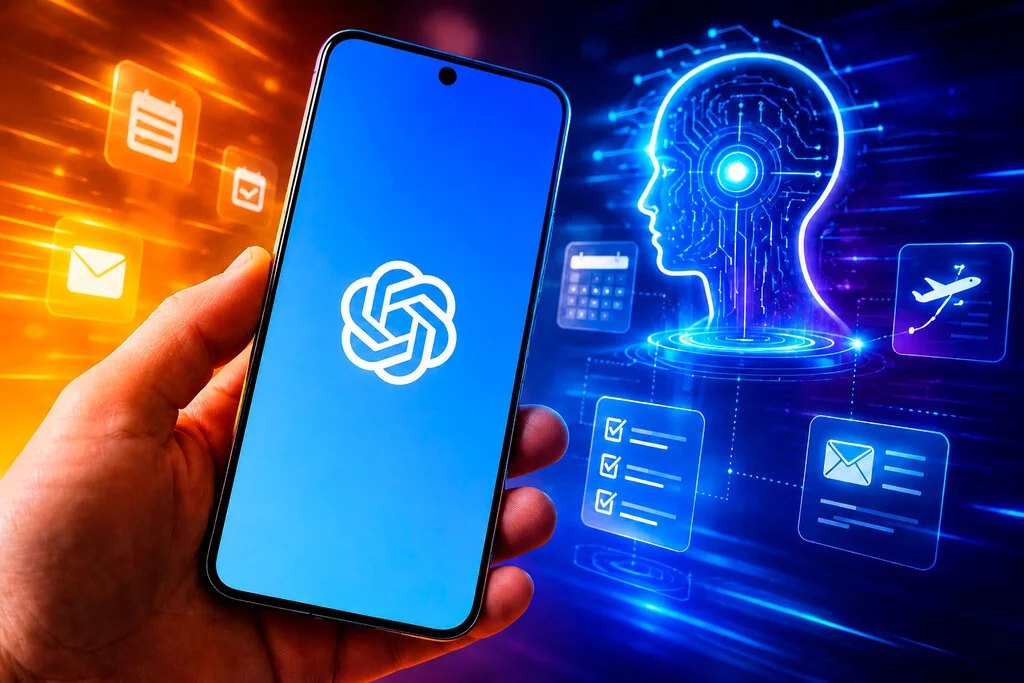

In an ambitious move poised to redefine the landscape of personal technology, several companies, most notably OpenAI, are pushing the boundaries of established paradigms, envisioning a future where the traditional graphical user interface (GUI) of operating systems gives way to a more intuitive, AI-driven interaction model: the agentic operating system (AOS). Much like the tablet was once heralded, perhaps prematurely, as the eventual successor to the personal computer, the AOS aspires to fundamentally transform how we interact with our devices. The familiar rituals of navigating menus, clicking icons, and memorizing tool pathways are set to be replaced by a conversational paradigm, where users articulate their desires to an artificial intelligence, entrusting it with the autonomy to execute complex tasks. This vision, while aesthetically appealing in concept, raises critical questions about whether it represents a true technological revolution or merely a sophisticated re-packaging of existing functionalities.
From Button-Pressing to Conversational Command: The Paradigm Shift
The current digital ecosystem largely dictates that users must first master the operational mechanics of any traditional operating system. While the advent of touchscreens on smartphones and years of accumulated user experience have rendered these interfaces increasingly intuitive, the inherent human desire for natural communication suggests an even simpler alternative: direct verbal interaction with devices, articulating needs as they arise. This profound shift, from explicit command sequences to implicit intent understanding, lies at the very core of the agentic operating system.
Historically, human-computer interaction has evolved through distinct phases. Early computing relied on command-line interfaces (CLIs), demanding precise textual commands. The subsequent revolution of graphical user interfaces (GUIs), pioneered by Xerox PARC and popularized by Apple and Microsoft, democratized computing by making it visually intuitive. The mobile era further refined this with touch-based interfaces, prioritizing direct manipulation. Each transition aimed to lower the barrier to entry and enhance user experience. The proposed leap to an agentic OS represents the next logical step in this progression, moving beyond visual metaphors to natural language as the primary mode of interaction, effectively making the user’s intent the interface itself.
OpenAI, the organization that ignited the public’s imagination with its generative AI chatbots, is at the forefront of conceptualizing and developing what a robust agentic operating system should embody. This focus is far from coincidental; the company is reportedly deep in the development of its own smartphone, an ambitious hardware venture that strongly suggests a bespoke operating system optimized for AI at its heart. The synergy between hardware and a purpose-built AOS would allow OpenAI to demonstrate the full potential of its agentic vision without the constraints of existing platforms. Reports indicate that OpenAI has already secured key partnerships, with companies like MediaTek potentially providing advanced 2nm chips, essential for the on-device AI processing capabilities such an OS would demand, hinting at a projected launch around mid-2027.
The first tangible glimpse into this potential future emerged at a recent event organized by the company, the OpenAI Voice Hack Night. This gathering, designed to foster innovation around voice-enabled AI, saw an independent developer unveil a compelling demonstration of what an agentic phone might look like and how it could function.
The Interface Is the System: A Glimpse into the Future
The demonstration, publicly available via YouTube, showcased a conventional mobile phone form factor running a conceptual agentic system. What immediately stood out was the device’s ability to respond to complex, multi-step requests by intelligently orchestrating various functionalities to fulfill the user’s intent. More strikingly, the user interface itself dynamically adapted to each request. For instance, a command to "find a restaurant with good reviews that serves vegan food and book a table for two tonight" wouldn’t just trigger a search app; it would likely generate a temporary, context-specific interface displaying options, allowing for refinement, and then presenting booking confirmations, all within a fluid, conversational flow. This dynamic adaptability has led to the provocative question: could the agentic system signal the beginning of the end for traditional User Experience (UX) developers? While a complete obsolescence is unlikely, it certainly anticipates significant friction and a radical redefinition of their roles.
In essence, the agentic OS proposes:
- Intent-driven interaction: Users express goals, not specific commands.
- Proactive intelligence: The system anticipates needs and suggests actions.
- Dynamic interface generation: The UI adapts in real-time based on context and user requests, eliminating static apps.
- Task autonomy: The AI agent executes multi-step tasks across various domains without requiring explicit app launches.
- Reduced cognitive load: Users no longer need to learn specific app functionalities or navigation paths.
The overarching goal is to deliver a mobile experience devoid of distractions and traditional, siloed applications. This is the promise; the ultimate viability and extent of this vision remain to be seen. As encapsulated by a powerful statement from the demo: "the interface is the system." This signifies that the AI agent will be so profoundly proactive and context-aware that it will seamlessly adapt the screen’s content and interaction modalities to precisely what the user requires at any given moment. This contrasts sharply with current mobile OS, where users navigate to an app, which then dictates the interaction model. In an AOS, the interaction is the system, molded by the conversation.
Technological Pillars and Inherent Challenges
The realization of a truly agentic operating system hinges on several advanced technological pillars, each presenting its own set of formidable challenges.
-
Advanced Large Language Models (LLMs) and Multimodal AI: The core of an AOS will undoubtedly be highly sophisticated LLMs capable of understanding nuanced human language, intent, and context. These models must move beyond simple text generation to complex reasoning, planning, and execution. Furthermore, multimodal AI, integrating vision, speech, and potentially other sensory inputs, will be crucial for the agent to perceive the user’s environment and interact with it effectively. This requires models significantly more advanced than current state-of-the-art systems, capable of maintaining long-term conversational memory and adapting to individual user preferences over time.
-
On-Device AI Processing and Edge Computing: To ensure responsiveness, privacy, and minimize reliance on constant cloud connectivity, much of the AI processing for an AOS will need to occur directly on the device. This necessitates powerful, energy-efficient System-on-Chips (SoCs) with dedicated neural processing units (NPUs). The reported collaboration with MediaTek on 2nm chips underscores this requirement, as smaller process nodes enable more transistors, leading to higher performance and lower power consumption—critical for AI workloads on mobile devices. The challenge lies in balancing computational power with battery life and thermal management.
-
Security, Privacy, and Data Governance: An operating system that serves as a central agent for all user interactions, from personal communications to financial transactions, demands ironclad security and privacy protocols. How will OpenAI ensure that sensitive user data is protected? Strategies will likely include robust on-device encryption, strict data minimization policies, transparent data usage declarations, and perhaps a federated learning approach where models are trained on aggregated data without individual user data leaving the device. The ethical implications of an AI with such deep access to personal life also require careful consideration, including issues of bias, transparency, and user control over their own data and agent’s actions.
-
Interoperability and Ecosystem Integration: For an AOS to be truly useful, it must seamlessly interact with the vast existing digital ecosystem. This includes legacy web services, traditional applications (at least during a transition phase), smart home devices, and various cloud platforms. OpenAI would need to develop robust APIs and integration frameworks to allow third-party services to expose their functionalities to the agent, enabling it to orchestrate tasks across different platforms. This is a monumental task, as it requires cooperation and standardization across a highly fragmented tech industry.
-
Reliability, Error Handling, and Trust: AI models, while powerful, are not infallible. An agentic OS must be designed with robust error detection, recovery mechanisms, and the ability to gracefully handle ambiguities or failures. Users need to trust that the agent will execute tasks correctly and can be relied upon for critical operations. Building this trust will involve transparent feedback loops, clear explanations of actions taken, and easy ways for users to intervene or correct the agent’s behavior. The system must also learn from its mistakes and adapt.
-
User Adoption and Cognitive Re-training: Shifting from a deeply ingrained GUI paradigm to a conversational, agentic one will require users to unlearn old habits and embrace new ways of interacting. While intuitively appealing, the lack of visual cues and explicit controls might initially disorient some users. The AOS must provide intuitive onboarding and gradual adaptation pathways to facilitate widespread adoption. The success of voice assistants like Siri and Google Assistant, despite their limitations, shows a willingness from users to embrace conversational interfaces, but an AOS takes this to an entirely new level of autonomy and complexity.
Broader Impact and Implications
The emergence of agentic operating systems, particularly if championed by a major player like OpenAI, carries profound implications across the technology sector and society at large.
-
The Transformation of User Experience (UX) and User Interface (UI) Design: The initial question of whether UX developers face obsolescence can be refined. Instead of designing static screens and navigation flows, UX professionals would shift their focus to "agent behavior design," "AI interaction patterns," and "prompt engineering." Their role would be to define how the agent understands intent, prioritizes tasks, presents information dynamically, and recovers from errors. UI design would become generative, with designers defining principles and components that the AI uses to construct interfaces on the fly. This represents a paradigm shift from direct manipulation design to indirect, conversational, and AI-mediated interaction design. The demand for "AI whisperers" or "agent trainers" who can effectively guide and refine AI behavior will likely skyrocket.
-
Disruption of the App Ecosystem and App Stores: If an AOS can seamlessly orchestrate tasks across various services without requiring dedicated applications, the traditional app store model could face significant disruption. Users might no longer download individual apps but rather subscribe to services or capabilities that the agent integrates. This would fundamentally alter how software is developed, distributed, and monetized. Developers might need to focus on creating robust API endpoints for their services, optimizing for agentic integration rather than building standalone applications with bespoke UIs. This could democratize access to functionality, as users wouldn’t need to navigate multiple app interfaces.
-
Intensification of the AI Arms Race: The prospect of OpenAI launching its own smartphone with a proprietary agentic OS will undoubtedly intensify the AI competition among tech giants. Apple, Google, and Microsoft are already heavily invested in AI agents (Siri, Google Assistant, Copilot) and are integrating them deeper into their respective operating systems (iOS, Android, Windows). An OpenAI-led breakthrough could accelerate their efforts to deliver similar, fully integrated agentic experiences, potentially leading to a new era of platform wars centered on AI capabilities and user autonomy. This could foster innovation but also raise concerns about market concentration and ecosystem lock-in.
-
Societal Impact and Digital Inclusion: An AOS could lower the barrier to entry for digital technologies for certain demographics, such as the elderly or those with disabilities, by simplifying interaction through natural language. However, it also introduces new forms of digital literacy challenges, as users must learn to effectively communicate with and trust an autonomous agent. Ethical considerations surrounding AI bias, transparency, and accountability become even more critical when an agent has broad control over a user’s digital life. The potential for over-reliance on AI, or the erosion of critical thinking skills due to constant AI assistance, also warrants careful societal discussion.
The Great Unknown: When Will It Be Available?
The agentic operating system is not merely a conceptual pipe dream; it is an idea rapidly maturing, driven by significant advancements in AI and computing. Nevertheless, the precise timeline for OpenAI’s official unveiling remains speculative. Based on various leaks and industry rumors, the anticipated launch of OpenAI’s smartphone, which is expected to showcase this innovative OS, is slated for mid-2027. It is logical to assume that the agentic system would debut concurrently with this dedicated hardware, providing an optimized platform for its capabilities. However, the hackathon demonstration, while immensely promising and indicative of a clear direction, should be viewed as an exploratory peek into possibilities rather than an official roadmap. The development of such a complex, transformative system involves countless iterations, overcoming unforeseen technical hurdles, and extensive testing to ensure robustness and security.
The journey from a hackathon demo to a fully functional, market-ready operating system is long and fraught with challenges. While the vision of an agentic OS promises a more intuitive, powerful, and personalized digital experience, its ultimate success will depend on OpenAI’s ability to address the intricate technological, ethical, and user adoption challenges that lie ahead. The question remains whether this bold initiative will usher in a true revolution in human-computer interaction or if it will be another step in the continuous evolution of how we engage with our digital world. Regardless, the intent to fundamentally reshape the very fabric of our digital lives is clear, and the implications for technology and society are immense.
