
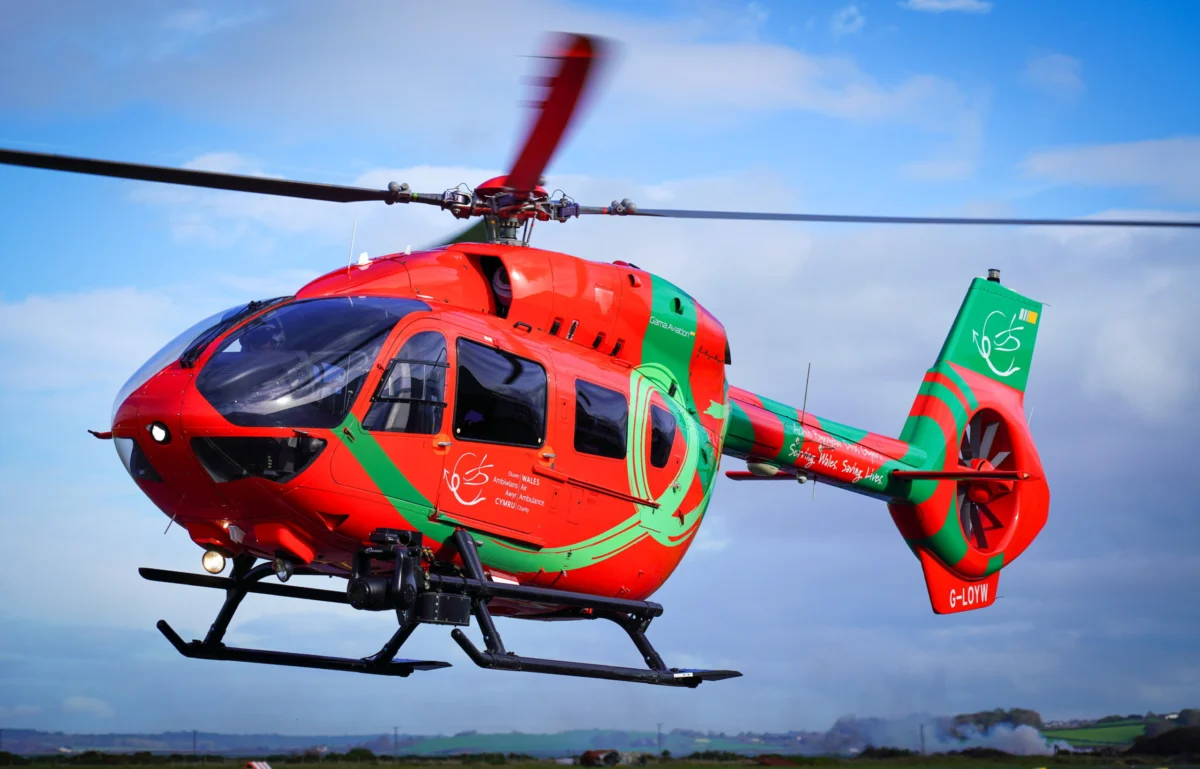

The Wales Air Ambulance (WAA), a cornerstone of the Welsh emergency medical infrastructure, has successfully integrated intelligent automation into its back-office operations, marking a significant milestone in its 25-year history. This strategic digital transformation has reportedly slashed administrative costs, bolstered staff morale, and redirected vital resources toward the organization’s primary mission: delivering advanced life-saving care across the country. By automating the labor-intensive processes associated with its primary fundraising lottery, the charity has effectively traded hours of manual data entry for minutes of algorithmic precision, ensuring that more of every donated pound goes directly to the frontline of emergency medicine.
Operating 24 hours a day, 365 days a year, the Wales Air Ambulance provides a critical service that bridges the gap between major trauma incidents and hospital care. The charity utilizes a fleet of advanced helicopters and rapid response vehicles to reach patients suffering from life- or limb-threatening injuries or illnesses. As the organization celebrates its silver anniversary this year, the adoption of Robotic Process Automation (RPA) represents a shift toward a more sustainable and technologically resilient future, allowing a non-profit operating under permanent financial constraints to maximize its operational efficiency.
The Financial Landscape of Emergency Aeromedical Services
To understand the necessity of this technological shift, it is essential to contextualize the unique position of air ambulance services within the United Kingdom. While the National Health Service (NHS) provides the medical staff and clinical governance for many such operations, the aircraft, fuel, pilots, and maintenance are almost entirely funded by public donations and charitable grants. For Wales Air Ambulance, this means maintaining a constant stream of revenue to support an operation that averages 70 missions per week. Over its history, the charity has responded to more than 55,000 emergencies.
The primary engine of this revenue is a weekly lottery. For a small entry fee, supporters are entered into a draw with a top prize of £1,000. While the lottery provides a stable and predictable income stream, the administrative burden of managing tens of thousands of participants was historically immense. Prior to the automation initiative, staff were required to navigate multiple legacy systems, process daily BACS (Bankers’ Automated Clearing System) reports, manage complex direct debit mandates, and manually generate communications for new members or cancellations.
Kieran King, Head of IT at Wales Air Ambulance, noted that these repetitive tasks were not only time-consuming but were increasingly becoming a bottleneck for growth. "Our lottery is arguably the largest fundraising revenue stream we have, but it relied heavily on manual processes, which were time-consuming and prone to human error," King stated. The reliance on manual entry limited the organization’s ability to scale its fundraising efforts without a proportional—and expensive—increase in administrative headcount.
Chronology of Digital Transformation
The journey toward automation at Wales Air Ambulance did not happen overnight. It began approximately six years ago when the organization’s leadership identified digital transformation as a prerequisite for long-term survival. When Kieran King took over the IT leadership four years ago, he inherited a relationship with ArvatoConnect, the CRM and service provider arm of the global Arvato group.
The strategy was built on a model of collaborative co-design. Rather than replacing the charity’s existing software applications—a process that is often costly and disruptive—the team focused on "overlaying" automation. By implementing ArvatoConnect’s proprietary ProcessAutomate RPA tool, the charity was able to create "digital workers" that mimic human interactions with existing software interfaces.
This approach allowed for a phased implementation:
- Phase One (Identification): Auditing the lottery workflow to identify the most repetitive and error-prone tasks.
- Phase Two (Integration): Deploying RPA to handle BACS reports and direct debit updates.
- Phase Three (Communication): Automating the generation and dispatch of sign-up letters and forms via email.
- Phase Four (Internal Capability): Shifting from a managed service model to one where WAA staff are trained to manage and evolve the automation themselves.
Quantifiable Efficiency Gains and Financial Impact
The results of the RPA implementation have been stark, providing a blueprint for how other non-profits might navigate resource scarcity. According to internal data provided by the charity, the time required to add new lottery members or process cancellations has been reduced by 92%. Tasks that previously demanded a full working day from an administrative employee are now completed in roughly one hour.
Furthermore, the processing of daily lottery reports, a task that used to consume significant portions of the workweek, has been halved. This efficiency gain effectively returns half a day per week to staff members, allowing them to pivot from data entry to donor stewardship and strategic fundraising initiatives.
The financial implications are equally significant. By transitioning from a paper-heavy, post-based communication system to automated digital engagement, the charity expects to save approximately £40,000 annually. In the world of air ambulance operations, where the cost of a single mission can reach several thousand pounds, these savings translate directly into more flights and more lives saved. Beyond the balance sheet, the reduction in physical mail significantly lowers the organization’s carbon footprint, aligning its operational methods with broader environmental sustainability goals.
The Hidden Value: Workflow Clarity and Staff Morale
While the "hard" data of time and money saved is impressive, Kieran King highlighted an unexpected "soft" benefit: the exposure and elimination of organizational "tacit knowledge." In many long-standing organizations, complex workflows often exist only in the minds of veteran employees, manifesting as inconsistent routines or unofficial "workarounds."
"Implementing automation forced us to rethink, standardize, and simplify workflows," King explained. "We’re talking years of tacit knowledge, manual checks, and workarounds—all these had accumulated. The clarity we gained by standardizing these steps has been as valuable as the automation itself."
By removing the "administrative drudgery," the charity has seen a noticeable improvement in staff morale. Employees are no longer bogged down by the "cognitive load" of managing repetitive, high-stakes data entry where a single typo could result in a failed payment or a disgruntled donor. Instead, they are empowered to focus on higher-value activities that foster stronger relationships with the public. Faster response times and more accurate communications have already led to more consistent engagement with the charity’s donor base.
Broader Implications for the Third Sector
The success of the Wales Air Ambulance serves as a compelling case study for the broader non-profit sector. Many charities operate on legacy systems and manual processes because the perceived cost of upgrading technology is too high. However, the RPA model demonstrates that "intelligent automation" can be a middle ground—extending the life of existing systems while reaping the benefits of modern efficiency.
Industry analysts suggest that as donor expectations rise, charities must provide a professional, "Amazon-like" experience in terms of communication and responsiveness. The shift toward digital-first engagement is no longer optional. For WAA, the move toward an "omnichannel donor experience" is the next logical step. This will allow staff and volunteers to manage supporter interactions seamlessly across web, email, social media, and phone, providing a unified view of the donor journey.
Future Outlook: Internal Ownership and Real-Time Data
Looking ahead, the partnership between Wales Air Ambulance and ArvatoConnect is evolving. The charity is moving away from a managed service model toward full internal ownership of its automated systems. This ensures that digital transformation is not a one-off project but a sustainable, internal capability.
King’s next priority is the development of real-time operational dashboards. These tools will provide leadership with instant insights into performance and efficiency, allowing for data-driven decision-making. Whether it is tracking the success of a new fundraising campaign in real-time or identifying a sudden drop-off in lottery renewals, the ability to act on data immediately is expected to further enhance service delivery.
As the Wales Air Ambulance enters its 26th year, the integration of RPA has proven that technology is not just a tool for the corporate world. In the context of emergency healthcare, where every second counts on the ground, saving minutes in the office is a vital component of the mission. By automating the mundane, the charity has ensured that its human talent remains focused on what matters most: the patients across Wales who depend on their life-saving intervention.
