

At the Data Center World 2026 conference held in Washington, D.C., a definitive consensus emerged among industry titans: the rapid evolution of artificial intelligence has rendered traditional data center design philosophies obsolete. The cornerstone workshop of the event, titled “More Massive Still! Delivering AI-Driven Scale in the Face of Historic Constraints,” served as a critical forum for discussing the industry’s transition from fragmented, siloed facilities to fully integrated “AI factories.” This shift represents more than a change in terminology; it is a fundamental transformation in how global computing infrastructure is conceived, built, and measured, moving away from legacy metrics like Power Usage Effectiveness (PUE) toward a new, performance-centric standard: tokens-per-watt.
The workshop convened an influential panel of experts from across the technology ecosystem, including Greg Stover of Vertiv, Al Nichols of Silverback Data Center Solutions, Josh Claman of Accelsius, Kourosh Nemati of NVIDIA, Nathan Mallamace of Supermicro, Rob Curtis of AMD, and Sherman Ikemoto of Cadence Design Systems. Together, these leaders outlined a future where the distinction between the silicon chip and the facility that houses it has effectively vanished. As Kourosh Nemati of NVIDIA noted during the session, “the system is now the chip,” signaling that the rack, the cooling loop, and the power grid must now be managed with the same precision as a semiconductor architecture.
The Chronology of Complexity: From Moore’s Law to Systems Engineering
To understand the urgency of the 2026 summit, one must look at the trajectory of data center development over the last decade. During the 2010s, the industry relied heavily on Moore’s Law—the observation that the number of transistors on a microchip doubles approximately every two years. This allowed hardware and facility teams to work independently; as chips became more efficient, facility managers simply had to provide more floor space and standardized cooling.
However, the rise of Large Language Models (LLMs) and generative AI has broken this cycle. The power density required for AI training and inference has skyrocketed, moving from average rack densities of 10 kW to 15 kW in 2020 to upwards of 100 kW and even 300 kW per rack by 2026. This escalation has forced a move away from air cooling toward advanced liquid cooling solutions and has pushed the total power requirements of individual campuses from the 100-megawatt range to the gigawatt scale.
The workshop participants emphasized that the era of fragmented design—where chips, packaging, racks, and cooling were optimized in isolation—ended when the power demands of the GPU clusters began to outpace the capacity of traditional electrical infrastructure. The "historic constraints" cited in the session title refer to the exhaustion of local power grids, the physical limits of heat dissipation, and the supply chain bottlenecks for specialized components.
The Economic Impact of the Stack Tax
Perhaps the most significant revelation from the Data Center World workshop was the quantification of the "stack tax." This concept describes the cumulative inefficiency that occurs when every layer of a data center’s infrastructure is over-engineered for safety. In a traditional model, a chip designer might include a 10% safety margin for power, the rack manufacturer adds another 10%, and the facility engineer adds a final 15% to ensure uptime.
According to data presented during the session, these compounding margins result in a massive waste of resources. In an unoptimized 1-gigawatt (GW) environment, the "stack tax" can reduce effective throughput by as much as 35%. For an AI factory utilizing NVIDIA’s Vera Rubin architecture, which is designed to support approximately 300,000 GPUs, an unoptimized system might only reach 65% of its potential token output.
This is no longer merely a technical oversight; it is a multi-billion-dollar business problem. In the competitive landscape of 2026, where AI companies are racing to reduce the cost of inference, a 35% loss in efficiency translates directly into lost revenue and higher costs for end-users. The panel argued that the only way to "repeal" this tax is through full-stack optimization, where every layer of the "five-layer cake"—energy, infrastructure, chips, models, and applications—is designed to work in a synchronized fashion.
Engineering the Five-Layer Cake: A New Design Methodology
The workshop detailed the necessity of a "connected system design methodology." This approach requires domains that historically operated independently to interact during the earliest phases of development. The "five-layer cake" model proposed by NVIDIA serves as the blueprint for this integration:
- Energy: Moving beyond simple grid connections to include on-site generation, modular nuclear reactors (SMRs), and advanced battery storage.
- Infrastructure: Transitioning to direct-to-chip liquid cooling and rear-door heat exchangers to manage the thermal output of high-density clusters.
- Chips: Utilizing advanced packaging techniques and high-bandwidth memory (HBM) to maximize data transfer speeds.
- Models: Optimizing software architectures to run efficiently on specific hardware configurations.
- Applications: Ensuring that the final AI services are delivered with minimal latency.
Speakers from AMD and Supermicro highlighted that emerging innovations, such as the UALink (Ultra Accelerator Link) and the OCP (Open Compute Project) standards for liquid cooling, are essential components of this integrated stack. However, these hardware innovations are only effective if the physical environment can support them. This is where digital twin technology has become the "glue" of the AI factory.
The Role of Digital Twins in Facility Optimization
Sherman Ikemoto of Cadence Design Systems provided a deep dive into the role of the Cadence Reality Digital Twin Platform. By creating a physics-based virtual replica of the AI factory, engineers can simulate airflow, liquid coolant dynamics, and power distribution before a single piece of hardware is installed.
A significant takeaway from the Cadence presentation was the tangible impact of these simulations. By using digital twins, operators have been able to achieve:
- Up to a 30% increase in capacity utilization by identifying "stranded" power and cooling.
- A 20% reduction in energy consumption through precise thermal management.
- The ability to test "what-if" scenarios, such as a cooling pump failure, without risking actual hardware.
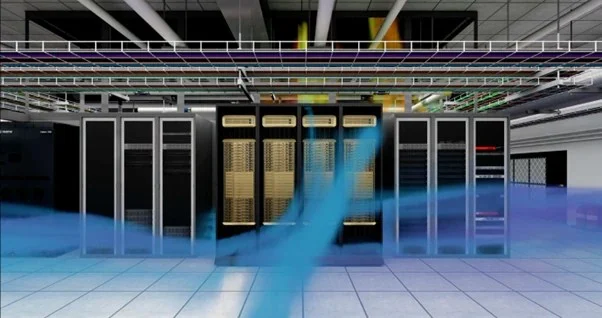
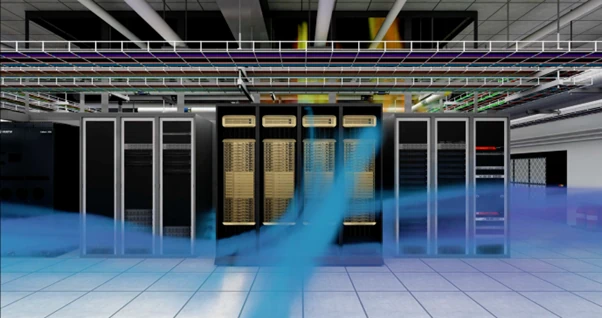
The rendering of the SimReady NVIDIA GB300 NVL72 model within the Cadence platform demonstrated how detailed airflow simulations can prevent "hot spots" in high-density AI clusters. As the industry moves toward 1 GW facilities, the margin for error in thermal management becomes zero. A single cooling failure in a high-density rack can lead to hardware damage within seconds; digital twins provide the predictive analytics necessary to prevent such catastrophes.
From PUE to Tokens-per-Watt: A Paradigm Shift in Metrics
For two decades, the data center industry has lived and died by Power Usage Effectiveness (PUE), a ratio of how much energy is used by the computing equipment versus the total energy delivered to the facility. However, the workshop participants argued that PUE is an incomplete metric for the AI era.
PUE measures efficiency, but it does not measure productivity. A facility could have a perfect PUE of 1.0 yet still be a failure if the GPUs inside are throttled due to poor thermal management or software bottlenecks. The industry is now pivoting toward "tokens-per-watt"—a metric that measures the actual output of the AI factory (tokens generated) against the total energy consumed.
This shift reframes the entire optimization goal. It is no longer enough to minimize the energy used by fans and pumps; the goal is to maximize the end-to-end output of the entire system. This requires a holistic view where hardware performance, software efficiency, and facility cooling are all tuned to the same objective. Nathan Mallamace of Supermicro noted that this metric forces vendors to be more transparent about how their components perform under real-world, high-load conditions rather than in laboratory settings.
Broader Implications and the Path Forward
The implications of the findings at Data Center World 2026 extend far beyond the walls of the data center. As AI factories scale to gigawatt levels, they become significant players in national energy policy and urban planning. The move toward integrated design is a necessity driven by the fact that the world simply does not have enough surplus energy to allow for the 35% "stack tax" inefficiencies of the past.
The path forward, as outlined by the panel, is built on three pillars:
- Open Standards: No single company can build the entire AI stack. Collaboration through organizations like the Open Compute Project is vital for ensuring interoperability between different vendors’ cooling and power systems.
- Integrated Design Tools: The use of platforms like Cadence’s Reality Digital Twin must become standard practice to bridge the gap between chip designers and facility engineers.
- Collaborative Ecosystems: The relationship between chipmakers (NVIDIA, AMD), infrastructure providers (Vertiv, Accelsius), and integrators (Supermicro, Silverback) must evolve from a transactional vendor-client model to a deeply integrated partnership.
The conclusion of the workshop was clear: the AI factory is a new class of infrastructure. It is an active, intelligent system that produces the world’s most valuable commodity—intelligence—in real time. The scale is unprecedented, the constraints are historic, and the margin for inefficiency has vanished. Only by adopting a unified, full-stack approach can the industry unlock the full potential of the AI era, ensuring that the massive investments in silicon and power translate into the maximum possible output for society.
